
Plan an electric guitar assortment around distinct customer needs, then select models that staff can explain and buyers can compare. Colour choices alone do not create a useful product ladder. Each model needs a defined role, confirmed specifications, a sample decision and complete listing material before quantities are discussed.
1. Start with the customer and channel
Separate first-electric buyers, players upgrading an existing instrument, design-led purchases and specialist requirements. Use your own enquiries, sales and returns to decide which needs deserve space. A shop with demonstrations and an online seller relying on photographs need different supporting material.
2. Assign a reason for each model
| Possible role | Decision to resolve |
|---|---|
| First electric | Can the customer understand the controls, required amplification and included items? |
| Versatile alternative | Does the pickup and control layout offer a relevant, demonstrable choice? |
| Step-up instrument | Which confirmed material, hardware, construction or functional difference justifies comparison? |
| Specialist format | Is there demand and support for its tuning, string replacement, bridge and playing requirements? |
These are possible roles, not a required number of models. A headless instrument can serve a specific preference, but should not automatically replace a conventional first-electric option. Record one principal reason to stock each SKU and identify overlaps before adding colours.
3. Compare pickup functions honestly
SSS, HSS and HH describe pickup arrangements, not a complete circuit or guaranteed genre. Confirm selector results, controls, active or passive operation and any switching functions. A credible comparison explains what the player can select and demonstrates the actual instrument under recorded conditions.
4. Use model differences that are supported
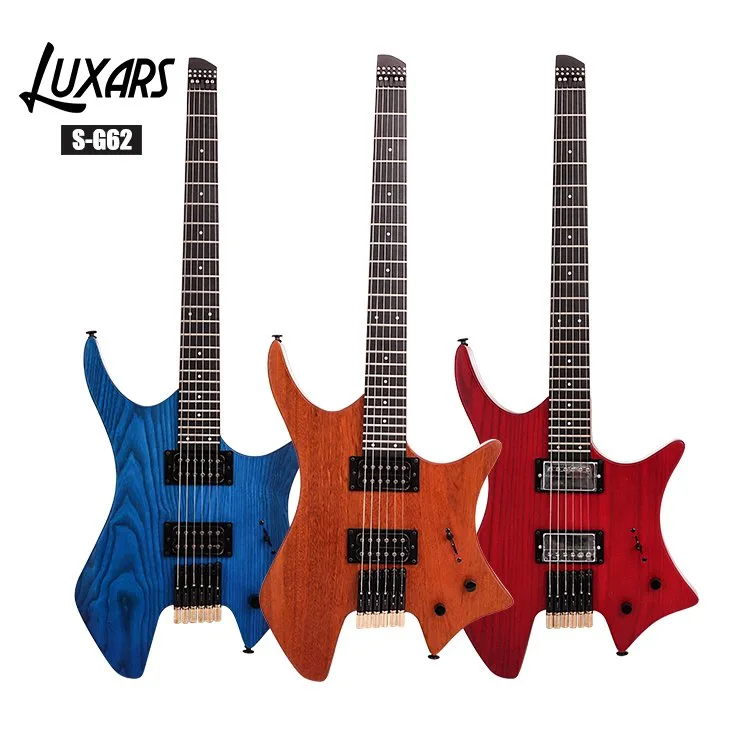
The LUXARS S-G62 is a headless reference with an HH layout. The S-G27 has a flamed maple veneer: describe it as veneer rather than a solid flamed maple top. Neither feature alone establishes a universal quality ranking. Use the approved model record for all further specifications.
5. Keep finish options manageable
Choose finishes from observed demand, listing readiness and your own buying capacity. Distinguish colour from surface finish, and use approved photographs for the exact variant. Gloss, satin and matte are not interchangeable descriptions. Natural grain variation does not authorize changes in material or construction.
6. Review samples and listing readiness together
Check the sample against its dated specification and record setup observations, controls, faults and accepted corrections. Photographs can identify appearance and visible hardware; they cannot verify hidden materials or wiring. Reconcile the final sample record with the quotation and order before approval.
Prepare consistent front, back and detail photographs, dimensions with units, controls, required equipment and an itemized contents list. Staff and online buyers should receive the same approved facts. Keep commercial terms in the agreed quotation rather than inventing retail prices or availability.
7. Maintain one comparison sheet
For every model, record customer role, distinctive feature, finish variants, document revision, sample status, listing gaps and decision owner. Review overlap when your own sales or support evidence changes. An additional SKU should resolve a customer choice, not merely enlarge the catalogue.
Discuss an electric range with Luxars Music
Send your market, sales channel, intended player groups and shortlisted models to sale@luxarsmusic.com. Ask for the current model records and identify missing fields before discussing an order.
Related buyer guides
Pickup configurations · Beginner-to-intermediate range · Specification review
Explore current product records
Use these product records with the checklist. Then send your shortlist and any missing requirements through the enquiry option below.
 English