
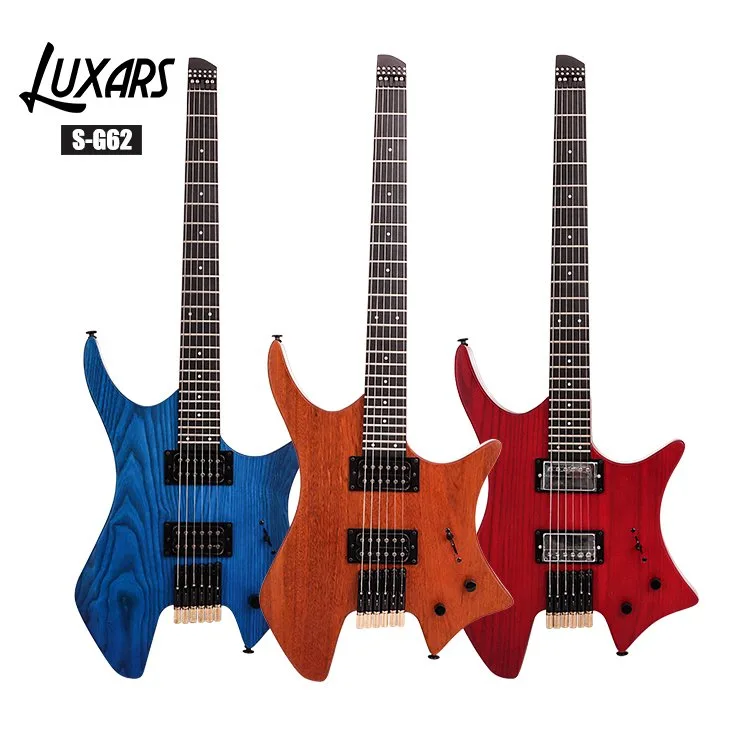
Electric guitars in multiple finishes displayed for retail assortment planning

Electric Guitar Assortment Planning for Music Retailers

A useful electric guitar range is not the one with the most models. It is the one in which every guitar has a clear customer, playing need and position in the catalog. Retailers should plan the range around player level, body format, pickup layout, finish and selling channel, then remove SKUs that do the same job.

The short answer

Start with three or four distinct roles rather than a long model list: an accessible first electric guitar, a versatile step-up model, a design-led or higher-specification option, and—only when the market supports it—a compact or headless alternative. Pickup configuration, neck feel, hardware and finish should make the difference between those roles easy to explain in store and online.

This approach is especially useful for distributors and multi-channel retailers. It creates a range that is easier to train staff on, simpler to present in product filters and less likely to leave several nearly identical guitars competing for the same buyer.

Key points for music retailers

  • Give every model a defined role before discussing colors or order quantities.
  • Use pickup layout and switching as customer-facing differences, not unexplained specification codes.
  • Keep a controlled finish palette at launch; add colors after demand becomes visible.
  • Compare product pages as carefully as samples, because inconsistent specifications create returns and sales questions.
  • Review the range as a whole so that a new SKU adds a real choice instead of duplicating an existing model.
LuxarsMusic S-G62 headless electric guitar for a retail assortment
A headless design can add a visibly different compact or modern role to a range, but it should complement—not replace—the core models familiar to most first-time buyers.

A practical electric guitar assortment framework

Range roleCustomer needUseful differentiatorsBuyer check
First electric guitarClear controls, familiar feel and easy product explanationSimple pickup layout, dependable hardware, focused color choiceDoes the listing answer a beginner’s basic setup questions?
Versatile step-upMore tonal options and a noticeable specification improvementPickup combination, switching, fretwork, neck finishCan staff explain the upgrade without relying on price alone?
Design-led or higher-spec modelDistinct appearance, materials or playing featuresTop material, finish detail, upgraded pickups or hardwareAre the visible and functional differences documented?
Compact or headless optionPortability, modern styling or a different balanceBody format, bridge system, scale and weight informationIs it a proven local need or just another similar SKU?

1. Define the customer before the guitar

An assortment discussion often begins with models, finishes and specifications. A better starting point is the customer. Is the store serving new players buying a first instrument, experienced players looking for a different sound, online customers comparing specifications, or traveling musicians interested in a compact format? The answer changes which differences deserve space in the catalog.

A first-guitar role should be straightforward to understand. The product title, images and specification table need to explain pickup type, controls, neck material, fret count and included items consistently. A step-up model should offer a reason to move beyond the entry role—better-defined hardware, a different pickup combination, more careful fret treatment, a distinctive top or a finish that is clearly shown in detail photographs.

A specialty model earns its place differently. A headless or travel-oriented guitar may attract customers who value portability or modern design, but it should not be ordered as if every market treats it as a standard alternative. Buyers should first decide whether it answers an observed request in their channel.

2. Turn pickup specifications into useful choices

Pickup descriptions are among the most important pieces of electric guitar listing data, yet they are often reduced to letters that new players do not understand. A retailer does not need to promise one configuration is universally better. It needs to explain how the layouts differ and why each belongs in the range.

  • Single-coil-led layouts can provide clear separation and familiar switching choices for many clean, pop, funk, blues and classic styles.
  • Dual-humbucker layouts offer a different response and are commonly selected by players who want a fuller, stronger pickup voice.
  • Mixed layouts can broaden the available sounds, but the extra switching only helps when the product page and store team can explain it.

The LuxarsMusic S-G62 headless electric guitar, for example, lists an HH Alnico V pickup configuration with volume, tone and a three-way switch. That gives it a clear specification story: a modern headless format paired with a direct dual-humbucker control layout. It should be presented as a defined role, not buried among guitars with unrelated pickup systems.

Controls and body details of the LuxarsMusic S-G62 headless electric guitar
Detail images should make the bridge, pickup arrangement and controls visible. Those photographs reduce ambiguity when a buyer prepares listings or trains a sales team.

3. Make the step-up visible without showing a retail price

On a B2B site, range position does not need to be communicated through a public retail price. The product itself should show why it occupies a different role. Materials, fret finishing, pickup type, hardware, surface treatment and imagery can establish a clear progression while commercial quotations remain part of the inquiry process.

The LuxarsMusic SG27-FM is a useful example. Its published specifications identify a solid flamed maple top, roasted maple neck and fretboard, rounded fret ends, Alnico pickups and a high-gloss finish. Those details can support a higher-specification role because they are concrete and can be shown. Copy should avoid vague claims such as “professional quality” when a precise material or feature does the explanatory work better.

LuxarsMusic SG27-FM electric guitar with flamed maple top
A full product view establishes the SG27-FM’s shape and finish; close-ups should then confirm the top, fretwork, pickups and hardware mentioned in the specification sheet.

4. Control color and finish duplication

Color can create attention, but it can also multiply inventory without adding a new customer role. At launch, select finishes that help the range read clearly: a familiar core color, one visually distinctive option and, where relevant, a finish that highlights the top material. Avoid ordering several near-identical shades before the channel has evidence that customers distinguish between them.

Finish information needs consistent language. “Gloss,” “high gloss,” “satin” and “matte” should not be used interchangeably. Confirm the production description, then use the same term in the catalog, quotation, carton label and online listing. If a photographed sample differs from the approved color reference, resolve the difference before the image becomes a sales asset.

LuxarsMusic SG27-FM electric guitar finish and hardware detail
A consistent set of front, back and detail images makes finish differences easier to compare across SKUs and sales channels.

5. Check the information system, not only the sample

A sample can play well while its sales information remains incomplete. Before confirming a range, compare the product page, specification sheet, quotation and image folder line by line. Model name, body and neck materials, fret count, pickups, controls, bridge, finish and available colors should agree everywhere. If two fields conflict, the answer should come from a verified product specification—not from whichever document was written last.

This matters even more for e-commerce. Customers cannot hold the guitar before ordering, and marketplace staff may build the listing from supplied data without specialist knowledge. Clear files reduce repeated questions and prevent a retailer from publishing a specification that another document contradicts.

6. Review the complete range before adding another SKU

Lay the proposed models out in one comparison sheet. For each SKU, write one sentence describing its job. If two sentences are almost the same, compare their pickups, body format, neck, hardware and finish. A color change alone may be a valid option within one model, but it does not always justify a separate range position.

  1. Identify the target player and main sales channel.
  2. Assign each model a role: first guitar, versatile step-up, design-led upgrade or specialty format.
  3. Compare pickup and control layouts in plain language.
  4. Check that visual and functional differences are documented.
  5. Confirm all specifications and images against the approved sample.
  6. Remove overlapping choices, then plan quantities through a private quotation.

Retailers building more than one category can use the same logic in our guides to acoustic guitar selection and classical versus acoustic guitar planning. The aim is consistent: every product should give the customer a reason to choose it.

Questions buyers frequently ask

How many electric guitar models should a first retail range include?

There is no universal number. A focused starting range might cover three or four roles, with controlled color options within them. Add models when they serve a new player, pickup need, body format or channel—not simply because more SKUs are available.

Should a retailer begin with single-coil or humbucker guitars?

The answer depends on the music customers play and the products already selling in the channel. Many ranges include clearly differentiated options. What matters is that pickup layouts are accurately described and that staff can explain the practical choice.

Does a headless guitar belong in every catalog?

No. A headless model can be valuable for portability, balance or modern styling, but it is a specialty role in many markets. Confirm customer interest and explain the bridge and tuning system clearly before giving it significant range space.

What should be checked on an electric guitar sample?

Review neck alignment, fret condition, action, intonation, tuning stability, bridge adjustment, controls, switch operation, pickup output, unwanted noise, finish and packaging. Then compare the sample with the approved specification and image set.

How should B2B buyers request pricing?

Pricing should be discussed through an inquiry that identifies the market, sales channel, product interests and estimated requirements. This gives both sides enough context to prepare relevant product information and a commercial quotation without presenting a consumer retail price on the catalog page.


Tell Us About Your Market

Tell LuxarsMusic which electric guitar roles, pickup configurations, finishes and sales channels you are planning. We can provide relevant product information and discuss the next steps for your market. Contact us through WhatsApp at +86 13620576554 or email info@luxarsmusic.com.

Tell Us About Your Market

Share your company, target market, sales channel, product categories and estimated requirements. LuxarsMusic will review the relevant published products and next steps.

WhatsApp: +86 13620576554   Email: info@luxarsmusic.com

Get a Quote
en_USEnglish
Scroll to Top