
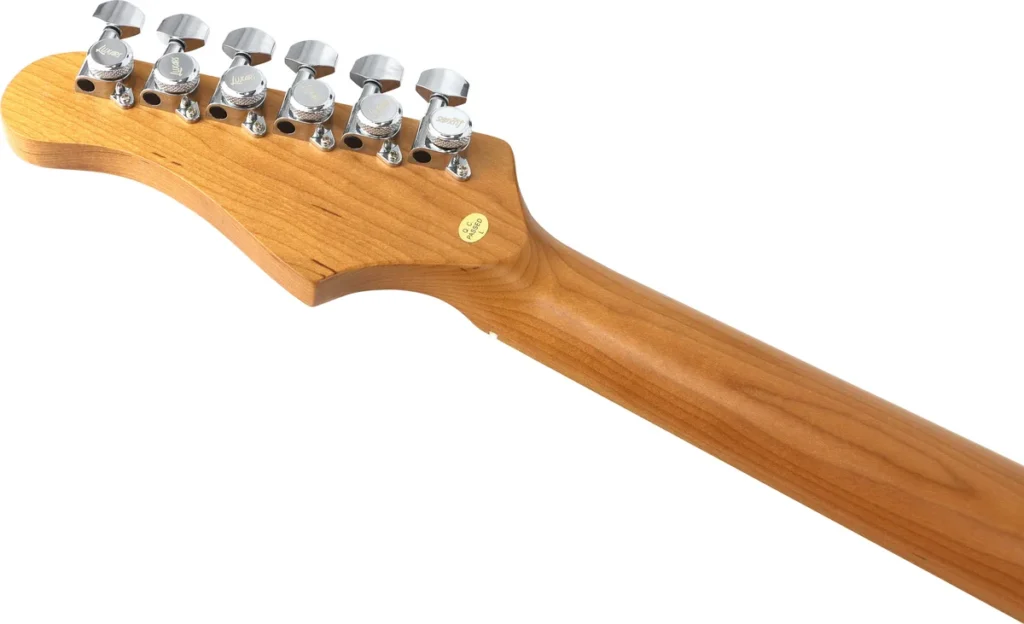
Locking tuners hold the string at the tuning post, while the tuning key still changes its tension and pitch. For retailers, the useful comparison includes the fitting method, model-specific instructions and replacement compatibility. The word locking does not establish a locking nut, a particular bridge system or a guarantee that the whole instrument will stay in tune.
Explain which part holds the string
Fender’s tuning-machine explanation describes locking the string at the post. The mechanism and fitting instructions still need to be identified for the actual tuner. A knob’s appearance alone cannot establish how the string is secured.
Show the customer the relevant part on the demonstration instrument and use its instructions when explaining a string change. Keep a locking tuner, a locking nut and bridge-mounted tuning controls as separate entries in your record. If the hardware is unidentified, resolve that before promising a fitting routine or replacement part.
Start with the exact model and version
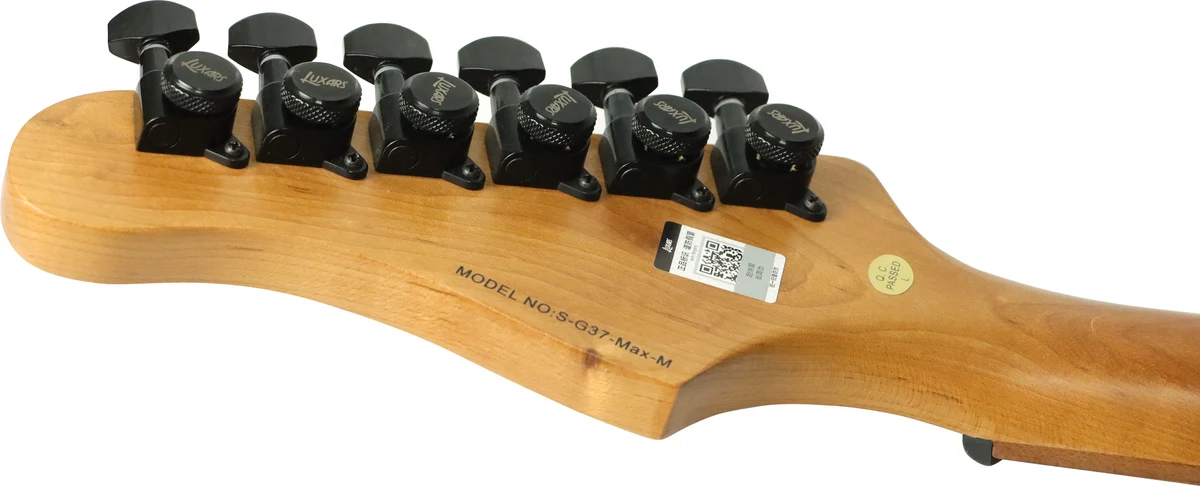
The LUXARS S-G37-MAX-M-N lists locking tuners. Its real rear-headstock photograph provides useful identification context. Confirm the fitted part and service information for the offered version when a customer needs replacement or string-fitting details.
Keep the full model suffix in the enquiry. A related model name, similar finish or matching number of tuning keys does not establish identical hardware. Link the relevant photograph to the sample record so staff and the supplier can discuss the same component.
Keep the demonstration and the diagnosis separate
Before a demonstration, record the fitted strings, tuning and any recent string change. Follow the tuner maker’s instructions for securing the strings and allow the sample’s tuning to settle. Avoid introducing an unfamiliar fitting method during a customer comparison.
If pitch changes during playing, record which string, the passage or control used, and whether the observation repeats. Include the sample identity and current setup. A report that one string changes pitch after a particular movement is useful information; it does not identify the faulty component by itself.
Do not present locking tuners as a cure for every tuning concern. Other parts and the instrument’s setup remain relevant to a technician’s assessment. The intonation guide addresses a separate question: the relationship between reference pitches and fretted notes. A tuner specification cannot replace that check.
| Decision | Information to obtain | Record before confirming |
|---|---|---|
| Explain the fitted system | Exact tuner identity and string-retention method | Model/version, relevant photographs and instructions |
| Prepare a string change | Accepted fitting procedure and string requirements | Complete fitted set, tuning and part-specific instructions |
| Compare replacement parts | Mounting, post, bushing and orientation details | Maker drawing and technician assessment |
| Investigate a concern | Repeatable observation on the actual sample | String, playing action, recent changes and date |
| Update a listing | Verified hardware for the offered version | Source revision; no assumed compatibility guarantee |
Check replacement compatibility before ordering
Fender’s replacement-tuner guidance illustrates how mounting arrangements and dimensions can differ. Its measurements concern the Fender parts described there; they do not establish a drop-in replacement for a LUXARS instrument.
Request the applicable drawing and compare the actual mounting-hole arrangement, post and bushing dimensions, headstock requirements and orientation. Ask whether a proposed set contains the correct handed units and number of machines. Use the part drawing first. Do not remove fitted hardware merely to fill in a sales record; ask a qualified technician when access or inspection is necessary.
Keep any required modification visible before the part is ordered. A replacement that calls for drilling, reaming or changing mounting positions needs a qualified assessment and the owner’s informed agreement to that work. Do not enlarge holes or test an uncertain fit merely to find out whether a set will work.
Write the listing around supported features
State locking tuners when that is the exact model’s published specification. Add a manufacturer or part reference only when confirmed. Keep gear ratio, post dimensions, accepted string sizes and any claimed installation benefit out of the listing until the applicable information is available.
Use the S-G25 product record as another documented model, with its own photographs and specification. Shared wording does not prove that two models use interchangeable tuning machines. A retailer can connect the models as comparison options while leaving their service-parts identities separate.
Questions about locking tuners
Does the lock prevent normal tuning?
No. The string is retained at the post; the tuning key remains the means of changing pitch. Follow the actual tuner’s instructions for fitting and releasing the string.
Does a locking tuner prove that the guitar has a locking nut?
No. Identify the nut and the bridge separately. A hardware description should name the component it actually concerns.
Can any six-in-line set replace another?
No. The layout description leaves mounting and dimensional compatibility unresolved. Obtain the relevant part drawings and a model-specific assessment.
Request the hardware information your shop needs
Choose models from the electric guitar collection, then send the full model identity, current hardware photographs and the fitting or replacement question to sale@luxarsmusic.com. Refer headless string systems to the separate headless compatibility guide. Keep each enquiry attached to the actual component and version.
 English