

An intonation check compares pitch at different positions on the same string. A guitar can have its open strings tuned correctly while a fretted note still reads differently from its expected pitch. For a retailer preparing a demonstration sample, make the comparison repeatable, record what the tuner shows and keep the finding separate from a diagnosis or a promise that every chord will be perfectly in tune.
Actual LUXARS S-G25 instrument and bridge photographs
Establish the sample’s starting condition
Write down the model, complete string set, tuning, date and tuner used. Check the tuner mode and reference setting before comparing readings. Use the same settings throughout the check, and avoid making a decision from an unstable display immediately after a strong attack.
Inspect the strings and note their condition. If they have recently been replaced, follow the fitting instructions and confirm that tuning has settled before recording a result. If a string will not hold pitch, investigate that problem first: a moving reference makes an intonation comparison difficult to repeat.
This record should travel with the sample. It is especially useful when staff change a gauge, prepare an instrument for a different tuning or receive a guitar back from service. The string-gauge guide explains the information to keep when a set changes.
Compare a harmonic and a fretted note
Fender’s Telecaster setup guide describes comparing the harmonic and fretted note at the 12th fret after the other setup checks. Use that as an explanation of the comparison, while following the instructions for the actual instrument’s bridge and setup.
Tune the open string, sound the 12th-fret harmonic, then play the fretted note with ordinary fretting pressure. Record whether the fretted note reads sharp or flat relative to the comparison pitch. If the tuner gives a cents reading, include the unit and the sign. Repeat a questionable observation before deciding that it needs service.
Keep the guitar in the same playing position. Pressing harder than the player’s normal technique can change the reading. Avoid pulling the string sideways or leaning on a tremolo during the check. Repeat the procedure for the other strings and identify each one in the record.

Make the service handover specific
| Record | What to capture | Why it belongs with the result |
|---|---|---|
| Sample identity | Model and instrument identifier | Keeps a finding attached to the actual guitar |
| Starting condition | String set, condition and tuning | Allows the next check to use comparable conditions |
| Tuner | Mode and reference pitch in Hz | Makes the pitch comparison repeatable |
| String result | String identity, comparison notes and sharp or flat reading | Shows where the concern occurred |
| Playing check | Chord or passage and fret positions used | Separates a tuner observation from a playing observation |
| Service outcome | Work authorized, work completed and follow-up check | Documents what changed before the sample returns to display |
“Needs intonation” is too vague for a useful handover. State which string, what was compared and whether the observation remained when repeated. Include any recent setup or string change without assuming it caused the problem.
Identify the hardware before proposing an adjustment
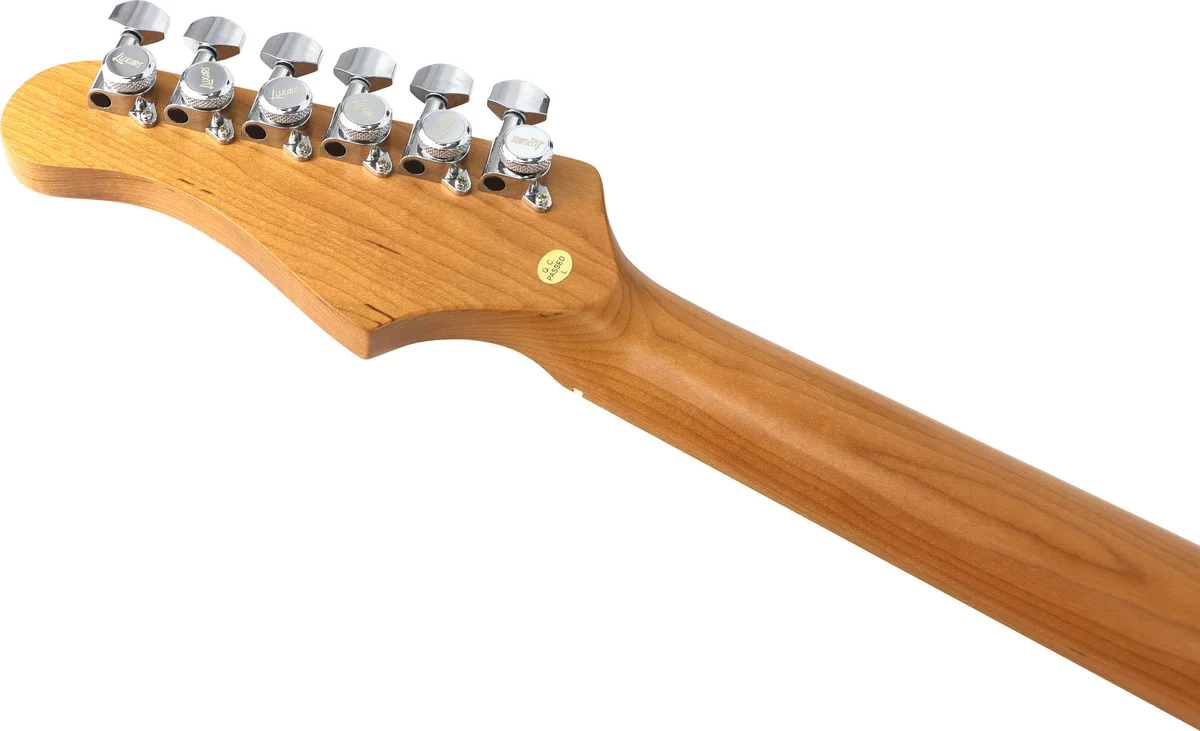
The LUXARS S-G25 is specified with a two-point tremolo and locking tuners. These describe fitted hardware; locking tuners do not, by themselves, correct the relationship between a fretted note and its reference pitch.
Saddle adjustment depends on the bridge. A procedure for another instrument should not become a universal instruction for this model. Acoustic saddle work also differs from turning an electric bridge’s intonation screw. Have a qualified technician assess the guitar and follow its service instructions before changing hardware.
Check the customer’s playing context
After a repeatable tuner check, play the chords or passages used in a normal demonstration. Identify the fret positions and note what staff or the customer heard. Avoid claiming that a good 12th-fret comparison proves every possible chord is perfectly in tune.
If the concern appears only under a particular playing task, demonstrate that task to the technician. Keep unusual fretting pressure, a bend or a changed tuning in the observation rather than reducing the entire problem to a saddle position.
Following service, retune and repeat the recorded comparison. Keep before-and-after readings with the sample’s record. A different result obtained with a different string set or tuner setting needs that context before it can be described as an improvement.
Questions during a demonstration
Is tuning the open strings enough?
It establishes the starting pitch. If the concern involves a fretted note, record a separate comparison at the relevant position.
Can staff make the same saddle change on every guitar?
No. Confirm the bridge, model instructions and authorized work first. The shop’s measurement record helps a technician assess the issue; it does not authorize an adjustment.
Build a clear sample-preparation routine
Contact LUXARS with your models, string sets, intended tuning and the readings already recorded. Request model-specific setup and service information for your retail demonstrations and keep it with each instrument.
 English