
To check guitar case fit, compare the actual instrument’s length, body outline and depth with the case’s usable interior, then inspect how the instrument is supported. A size label or body-family name does not establish the whole fit. Confirm the exact guitar and case models, including the neck and headstock space, before publishing a compatibility claim or creating a bundle.
Jump to a section
Record the instrument and case as a pair
Use a blank record to collect the missing dimensions. Add the exact model and version, measuring points, units, date and source before comparing results.
- Identify the guitar and the exact case or bag. Record overall and body length, body widths and depth.
- Compare those measurements with the usable case interior, including neck support, headstock space and hardware clearance.
- Record the actual fit and support check separately. Dimensions alone do not establish transport protection.
The file contains empty fields and measurement prompts. It supplies no LUXARS model dimensions or compatibility approval.
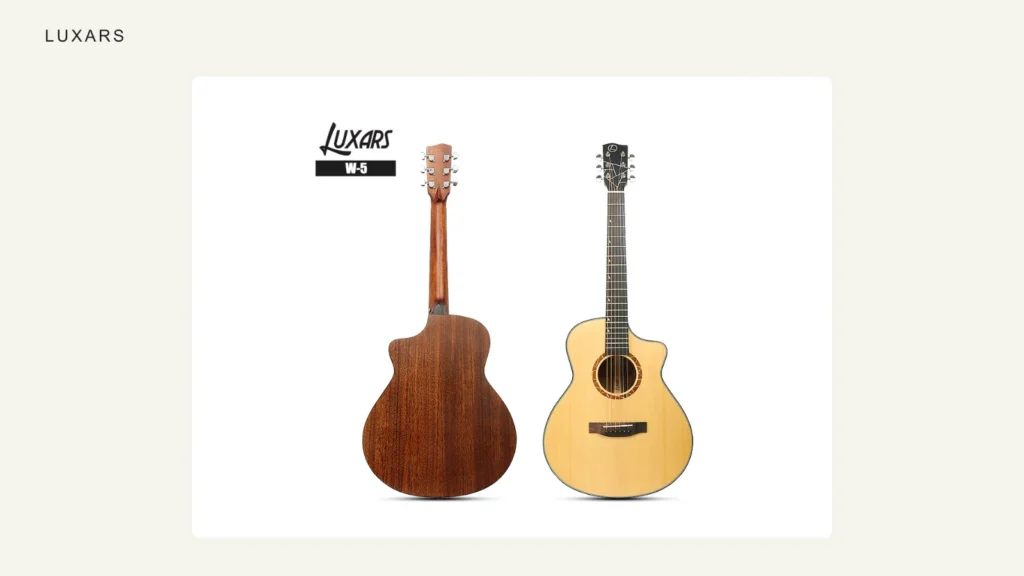
Actual W-5 front and rear photographs. The layout identifies the model and does not provide measured case-fit dimensions.
Start with the instrument and the interior
Identify the guitar, its relevant version and the candidate case or gig bag. Ask whether the listed case dimensions describe the usable interior, exterior shell or shipping carton. Those measurements serve different purposes. A large external dimension does not describe the cavity around the instrument.
Gator’s measurement guide lists overall and body length, body height and widths at the upper, middle and lower parts of the body. It notes that playing specifications such as scale length and nut width do not describe the overall instrument profile. Use the case maker’s definitions when comparing its fields with your measurements.
Obtain missing dimensions from the instrument or supplier. If a guitar is not available to inspect, ask for measurements and a drawing or clearly identified photographs. Keep compatibility unconfirmed internally until the relevant information is available. An attractive photograph of a guitar resting beside a case is not a fit assessment.
Build a measurement record that can be repeated
Use a protected surface and a measuring method that does not scratch the instrument. Note the points measured and compare the instrument and case in the same units. If a conversion is needed, retain the source value and the converted measurement in the record. Keep the exact guitar and case identifiers so another staff member can check the same pair.
Gator’s GWE-EXTREME measurement instructions explain overall length including the neck and headstock, widths at named parts of the body, and depth at the thickest point including bridge or tremolo. That is a useful example of measurement definitions; it does not approve the case for a LUXARS model.
| Field | What to establish | A common source of ambiguity |
|---|---|---|
| Overall length | Longest instrument dimension including headstock | Confusing scale length with instrument length |
| Body length | The body boundary used by the case maker | Measuring from different points |
| Body widths | Upper section, waist and lower section | Comparing only the widest point |
| Depth and protrusions | Thickest point including bridge or tremolo; check control clearance separately | Leaving fitted hardware out of the check |
| Neck and headstock space | Support position and available clearance | Looking only at the main body cavity |
| Interior shape | Contours, lining and fitted supports | Treating outside dimensions as usable space |
Dimensions are a way to screen a candidate. The final check also needs the shape of the cavity and the way its supports meet the instrument. Ask the case maker about its fit tolerances rather than introducing a universal clearance figure.
Prepare a model-specific fit enquiry
Send guitar and case identifiers, the measurements and photographs of the relevant areas. Request LUXARS model information when preparing a case bundle, and confirm the case recommendation with the case supplier.
Use LUXARS size labels for identification
The LUXARS W-5 is described as a 36-inch acoustic guitar with a thin body. The LR5D is a 41-inch all-solid dreadnought. Those fields distinguish the two models in a collection. They do not provide a complete body-dimension drawing or establish compatibility with a case carrying the same size label.
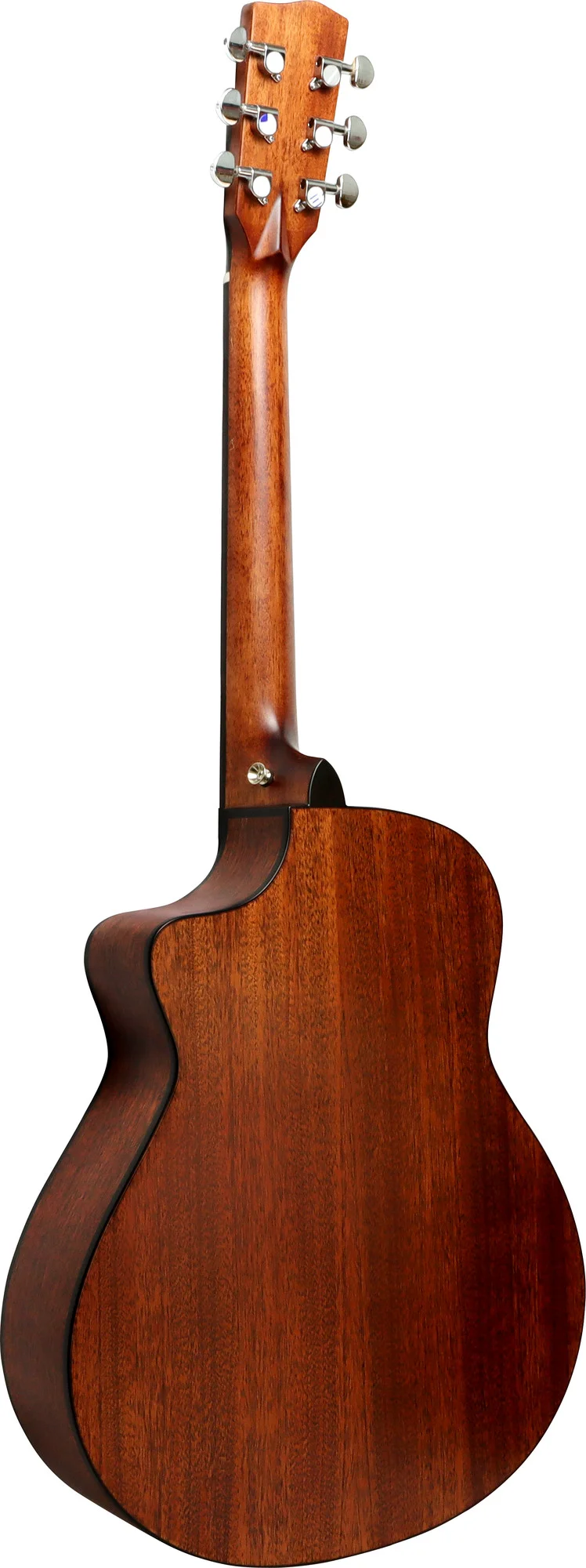
For W-5, request the actual body depth and support requirements as part of the fit enquiry. For LR5D, confirm the complete outline as well as length. Keep each model’s fit record separate, and avoid extending one checked pair to every instrument described as compact or dreadnought.
The acoustic size guide concerns how retail size labels and instrument features are explained to buyers. Case selection adds a different task: comparing the physical instrument with a specific storage product. A store can use both guides without substituting one set of fields for the other.
Model details for this comparison
Open the model specification and request the measurements needed for your comparison.
W-5
Published model fields
- Size
- 36 inches; thin body
- Top
- Solid spruce
Request instrument length, body widths and depth, then check the exact case interior and support. Nominal size alone does not confirm fit.
Ask about W-5LR1-36 / LR1-40
Published model fields
- Size
- LR1-36: 36 inches; LR1-40: 40 inches
Request instrument length, body widths and depth, then check the exact case interior and support. Nominal size alone does not confirm fit.
Ask about LR1-36 / LR1-40S-KPRO
Published model fields
- Size
- 30-inch nominal size
Request instrument length, body widths and depth, then check the exact case interior and support. Nominal size alone does not confirm fit.
Ask about S-KPROInspect support before closing the case
Follow the case maker’s instructions for placing the instrument and using any adjustable supports. Check where the body rests and where the neck support meets it. Look for contact with tuning machines, controls or other projecting parts. Confirm whether a removable accessory, such as a tremolo arm, should be detached under the relevant instructions.
Close the lid gently during the fit assessment. If closing requires force, stop and identify the contact point. The ability to engage a latch does not establish that the instrument is correctly supported. Have the supplier resolve questionable pressure, clearance or excessive movement before treating the pair as approved for a retail bundle.
Keep accessories in their intended compartment. Include the normal contents of that compartment in the assessment if they affect the fit. A loose item placed against the instrument changes the condition being checked; a photograph of an empty case does not document the complete packed arrangement.
Name the limits of the check
Fit and transport protection are separate questions. A store’s dimensional and support check does not establish a drop-test result, a waterproof rating or airline acceptance. SKB’s electric case specifications demonstrate that interior dimensions, exterior dimensions and product features can be listed separately. They do not establish those features for another manufacturer’s case.
Ask for the candidate product’s own protection claims and any applicable instructions. If the bundle will be shipped, review the outer packing arrangement separately. The packaging and after-sales guide addresses that order-information task; it is not a substitute for checking how the instrument sits inside the case.
Keep a useful bundle record
Record the checked guitar and case pair, assessment date, units, measured points and photographs of the supported instrument. Note any supplier confirmation and its scope. If the case or guitar version changes, review the affected fit fields before reusing the listing.
A bundle description should say which instrument and case are included and rely on the verified pairing. Keep an accessory supplied with a particular order separate from an optional recommendation. Ask for the actual model-specific packing list before telling a customer that a case comes with the guitar.
Questions when planning a case bundle
Does a 36-inch case label guarantee W-5 fit?
Confirm the case maker’s interior dimensions and the actual instrument. The W-5 size label does not establish body depth, support position or the entire cavity shape.
Are exterior dimensions enough for fit checking?
Use interior information for the instrument fit. Outside dimensions and carton dimensions describe different boundaries and cannot replace the usable cavity measurements.
Is a case approved if the latch closes?
Inspect support and clearance as well. Stop if closure requires force or a projecting part meets the lid. Ask the supplier to resolve the issue before making a compatibility claim.
Does a correct fit establish shipping protection?
It establishes only the scope of the fit assessment performed. Obtain the case’s own protection information and review the shipping package separately.
Discuss the exact instrument and accessory
Connect the fit record to the LUXARS product collection and the humidity care guide when advising customers on storage. Share your company, market and proposed guitar-and-case pairs. Request dimensions and packing information, email sale@luxarsmusic.com, or contact WhatsApp +86 13620576554.
 English