

Use a guitar’s advertised inch size as the start of a comparison, not as a complete fitting rule. Retailers should distinguish the size label from overall dimensions, body depth, scale length and neck measurements. Match those details to a customer’s handling needs, then use model-specific information and a properly identified sample to support the final choice.
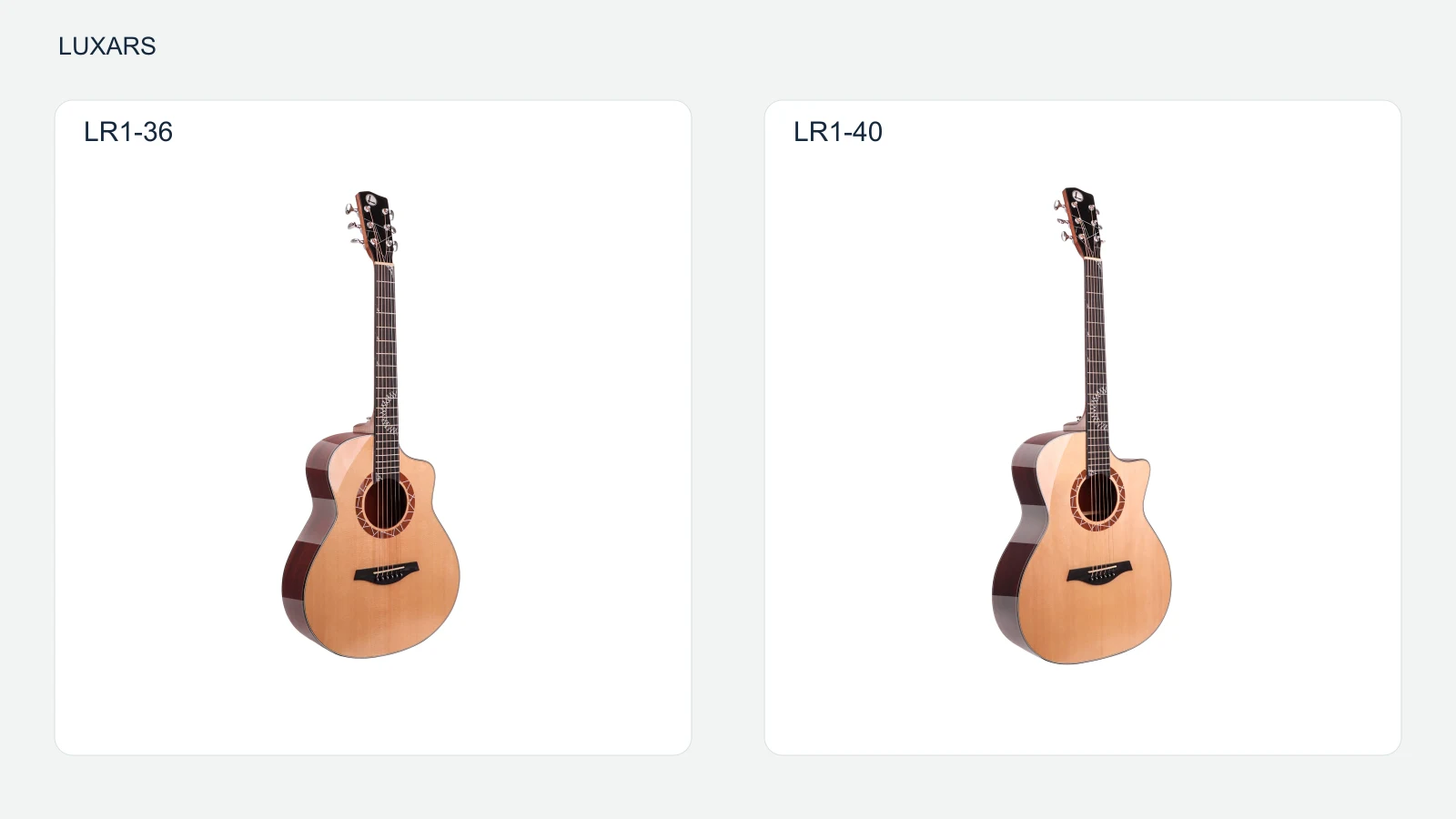
LR1-36, LR1-40 and LR5D photographs. The 36, 40 and 41-inch labels are nominal published sizes; the photographs are not to a common scale.
Key takeaways
- A nominal inch label does not replace a full dimension record.
- Overall length and scale length are different measurements.
- Two guitars with the same size label can have different body formats.
- Select by the intended handling experience, not an age label alone.
- Check bag and packaging fit using relevant actual dimensions.
Separate the size label from the measurements you need
“36-inch,” “40-inch” and “41-inch” are useful catalogue labels, but they do not supply every measurement a buyer needs. Record how the supplier uses the label and ask for the actual dimensions relevant to your channel. Do not insert a size label into a scale-length field or calculate an exact body width from it. A model-specific dimension table is more useful than an assumption based on the number in the name.
Overall length concerns the whole instrument. Body length, width and depth describe its body. Scale length concerns the playing length of the strings, while nut width describes a different part of the neck. These dimensions help answer different questions: whether the instrument fits a case, how it sits against the player and what neck or string-spacing information is needed for a useful comparison.
Keep units and measurement methods consistent. A dimension without a unit or a clear reference point may be hard for another colleague to use. If a supplier provides a drawing, store it with the model record. If your team measures a sample, record the model and the method, and distinguish that observation from a supplier-confirmed specification.
Use the confirmed LUXARS examples precisely
The approved LR1-36/LR1-40 specification lists nominal sizes of 36 and 40 inches, Grade A solid spruce tops and solid mahogany back and sides for both models. These shared construction details do not establish identical dimensions or playing feel. Request the actual model measurements when comparing reach, body depth or case fit.
The W-5 page describes a 36-inch thin-body acoustic guitar. The LR5D specification identifies a 41-inch dreadnought. These examples show why a useful comparison also includes the declared body format. They do not establish unlisted widths, depths, scale lengths or user-age ranges. Keep the published label and the fields still requiring confirmation separate.
| Model | Confirmed size information | Confirmed format information | Useful next question |
|---|---|---|---|
| LR1-36 | 36 inches | Refer to its own published specification | Which actual dimensions are needed for your sales channel? |
| LR1-40 | 40 inches | Do not borrow the 36-model configuration | Can the supplier confirm the 40-model dimension and specification record? |
| W-5 | 36 inches | Thin body | What dimensions support the intended handling or bag-fit comparison? |
| LR5D | 41 inches | Dreadnought | Which body and neck dimensions matter for the target user? |
Build a dimension record for the channel
A store and an online seller may need different levels of detail, but both benefit from a consistent record. Start with the exact model, nominal label, declared body shape and supplier-confirmed dimensions. Add the photograph set, units and any drawing used to explain reference points. This gives the sales team a stable source when creating a listing or answering an enquiry.
For a handling discussion, body depth and the neck information may be as relevant as overall length. For a bag discussion, the body outline and whole-instrument dimensions become important. For shipping, distinguish the instrument from its packed carton. Do not replace product dimensions with box dimensions or assume that a suitable-looking photograph establishes either measurement.
Keep the questions proportionate to the decision. A buyer comparing two published models does not need a speculative table filled with precise-looking numbers. They need the confirmed fields and a clear request for the dimensions that are missing. That is especially useful when a model name includes a size number but the detailed configuration has not yet been supplied.
Compare acoustic guitar sizes for your market
Tell LUXARS the models and nominal sizes you are considering, the intended customers and the fit information your channel needs. Request model dimensions for a structured comparison rather than relying on catalogue labels or differently scaled photographs.
Review handling with the intended user experience
The size label alone should not become a rigid rule based on age or height. People differ in reach, hand movement, seating position and playing habits. A useful sample review asks how the instrument sits against the body, how the player reaches the neck and whether the relevant movements feel suitable for the intended activity. Record those observations without turning them into universal demographic promises.
Compare the samples under similar conditions. Use the same seated or standing review arrangement where possible, and note the intended use. A player trying a guitar briefly on a counter may report something different from someone using it in a normal playing position. Give the reviewer time to assess the instrument, and keep body-handling observations separate from conclusions about sound or construction.
Two models carrying the same nominal size can still present different formats. W-5’s published thin-body description is a specific piece of information, while LR1-36 should be understood through its own model record. Do not assume identical thickness or handling from a shared 36-inch label. Likewise, a larger number does not by itself prove better tone or a more suitable instrument for every adult customer.
Make online size information easy to interpret
An effective listing combines the declared size with the dimensions actually confirmed for the offered model. Use a measurement diagram to identify overall length, body width or depth, scale length and nut width where relevant. Keep the diagram’s labels clear and its units consistent with the specification table. A schematic can explain a measurement without pretending that an unmeasured value is known.
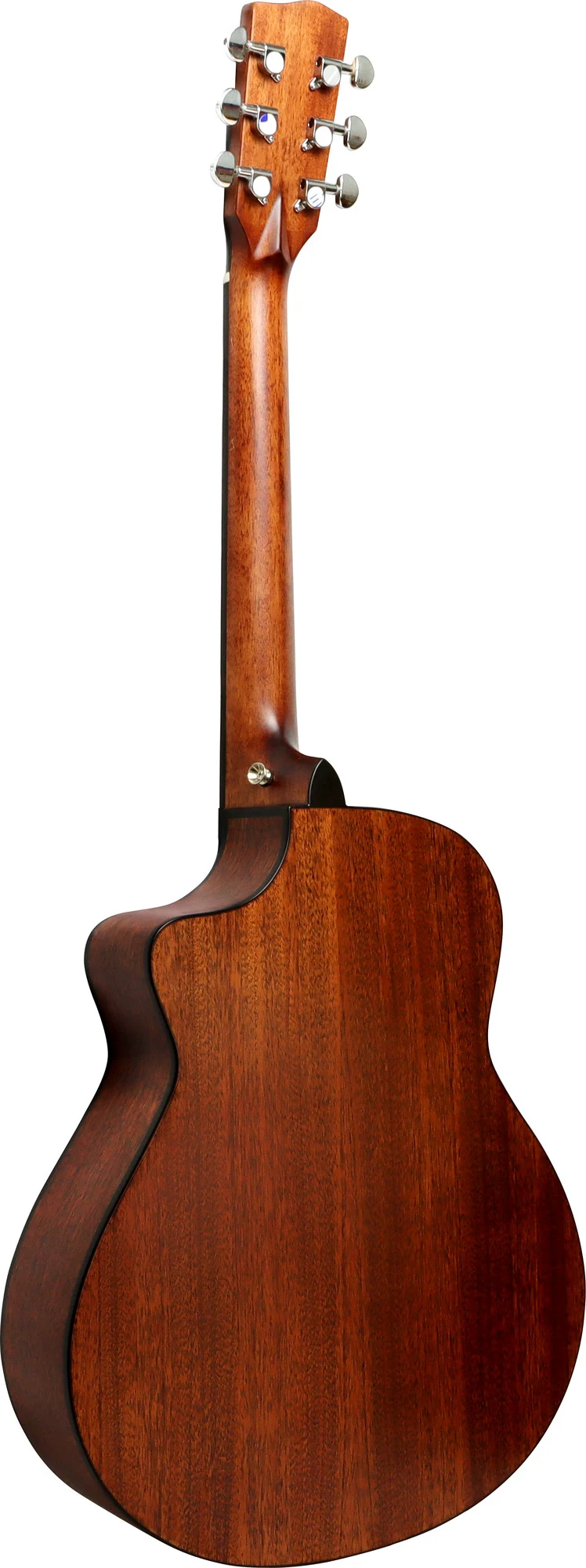
Use photographs for identification and appearance. A close-up is not a dimension drawing, and two separate product photos are not automatically at the same scale. If a composition presents LR1-36, LR1-40 and LR5D together, make clear that it is a product illustration rather than a measured scale comparison. Do not infer a numerical difference from the relative size of images on a screen.
This approach helps staff answer a precise question. Instead of saying “this is the right size for that age,” they can explain the available information and request the customer’s relevant needs. The listing becomes a useful route to a product discussion rather than a shortcut that creates a size expectation the instrument may not satisfy.
Confirm bag and packaging fit separately
A case or bag should be assessed against the actual instrument and the bag’s own usable dimensions and shape. A matching nominal size label is not enough to confirm compatibility. Ask how the neck, headstock and body are supported, and check the proposed combination with relevant information or an actual fit review. Do not claim that any “41-inch bag” necessarily fits every 41-inch-labelled guitar.
Packaging is another separate record. Confirm the included accessories, packing arrangement and any dimensions relevant to the shipment. Keep instrument dimensions and carton dimensions clearly labelled in quotation and receiving documents. Those fields support different activities, and confusing them can make both a retail listing and an order conversation less useful.
A sizing checklist for the next enquiry
- Identify the exact model and version.
- Record the nominal size and its stated meaning.
- Ask for the actual dimensions relevant to the customer or channel.
- Keep overall length, body dimensions and scale length separate.
- Check neck information where it matters to the comparison.
- Use consistent units, diagrams and measurement methods.
- Label product-photo compositions as not to scale.
- Review bag fit and packed dimensions separately.
Frequently asked questions
Is the advertised inch size the same as scale length?
Do not treat the two as interchangeable. A size label and a scale-length specification serve different purposes. Ask for the model’s actual dimension record and keep the fields separate rather than copying a 36-, 40- or 41-inch label into the scale-length entry.
Can a 36-inch guitar be selected by age or height alone?
An age or height label is not a complete fitting method. Review the intended handling experience, relevant dimensions and the actual model. A properly organised sample review can help identify needs that a nominal size number does not describe.
What is confirmed about LR1-36 and LR1-40?
LR1-36 and LR1-40 have nominal sizes of 36 and 40 inches. Both have Grade A solid spruce tops and solid mahogany back and sides in the approved specification. Use each model’s measured dimensions for a size or case-fit decision; a shared construction does not make the instruments interchangeable.
What dimensions should an online seller publish?
Publish the confirmed dimensions relevant to the model and buying decision, with units and clear labels. Distinguish instrument length, body dimensions, scale length and neck information. Use diagrams to explain reference points, and request any important missing fields before creating a precise-looking comparison.
How should buyers check guitar-bag and packaging fit?
Use the actual instrument dimensions and shape, the bag’s usable dimensions and a relevant fit review where needed. Confirm shipment packaging separately. Neither a matching size label nor a product photograph alone establishes compatibility or the packed dimensions of an order.
Sources and further reading
- LUXARS LR1-36/LR1-40, W-5 and LR5D product information.
- Taylor’s Small Bodies, Big Appeal, for a manufacturer discussion of body format and scale length as separate design considerations.
- Continue with the acoustic material guide or electric guitar bridge guide.
Tell us about your market
Share your company, target market, sales channel, intended customers and the models or nominal sizes under review. Specify the dimensions, photographs or fit information you need. Contact LUXARS, use WhatsApp +86 13620576554, or email sale@luxarsmusic.com.
 English