
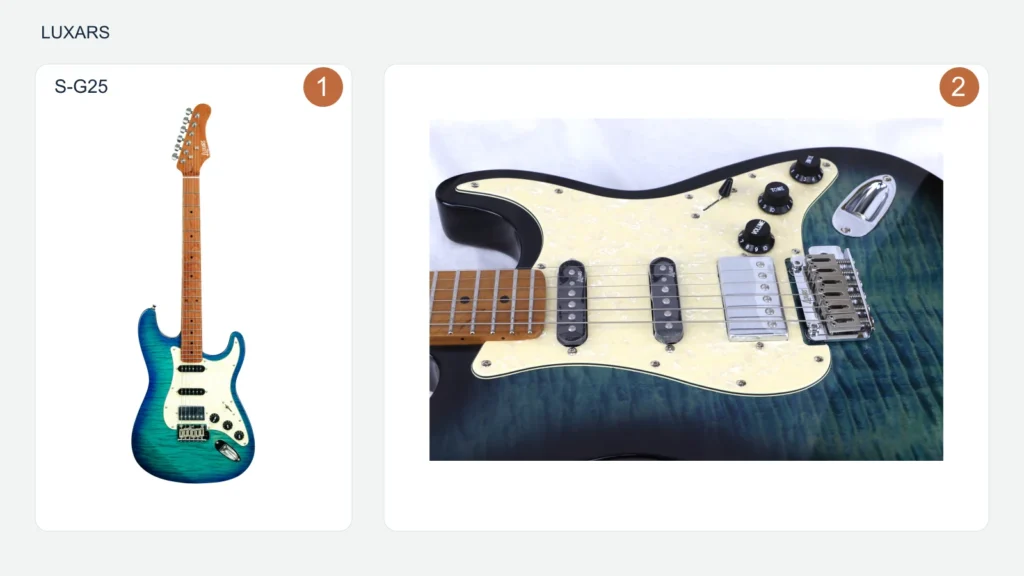
Choose an electric guitar bridge around the customer’s playing requirements and the support your sales channel can provide. A fixed bridge and a tremolo system offer different functions, while setup choices also matter within each category. Retailers should identify the actual bridge, explain its role clearly and confirm the model’s information before promising a particular tuning behaviour or maintenance experience.
LUXARS S-G25 electric guitar presented as a bridge-selection example
Key takeaways
- Decide whether the customer actually needs a tremolo arm.
- Read bridge type separately from tuners, pickups and nut information.
- Two-point describes a pivot arrangement, not a complete setup specification.
- Locking tuners are not the same component as a locking tremolo.
- Match demonstration, handover and support information to the model offered.
Identify the bridge before assigning a retail role
A fixed or hardtail bridge does not provide the moving tremolo function used to change pitch with an arm. Its saddles may still be adjustable. “Fixed” therefore does not mean that the instrument has no setup requirements. A retailer still needs the model’s information and a suitable review of the sample being offered.
Tremolo designs form several categories. Fender’s setup guidance distinguishes hardtail, conventional synchronized, modern two-pivot and locking arrangements. Those categories help a buyer ask better questions, but a brand’s published adjustment values apply to its own instruments. A familiar-looking bridge is not enough to establish a LUXARS setup dimension, replacement-part fit or hardware adjustment procedure.
For a buying discussion, start with the function and the declared type. Is the customer asking for expressive arm use, or do they mainly want an instrument for playing without it? Does the store have the experience to demonstrate and support the chosen system? Answering those questions is more productive than sorting every bridge into a universal “better” and “worse” ranking.
Separate bridge type from the rest of the hardware
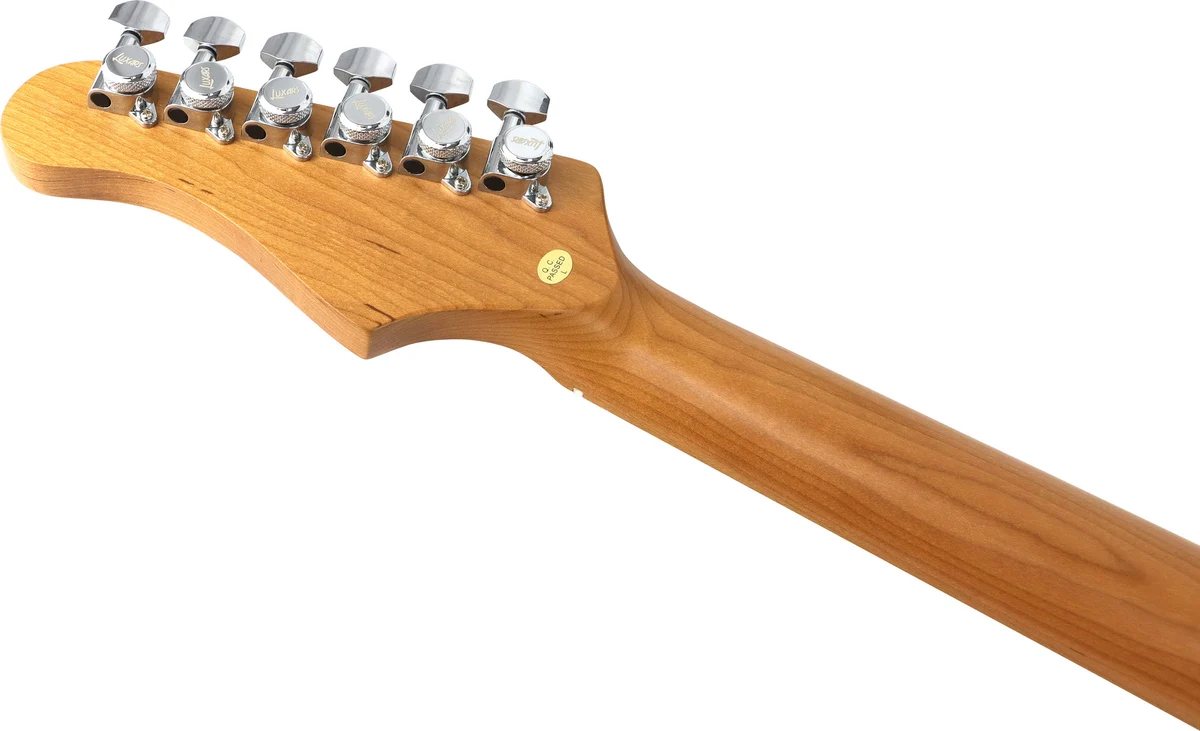
The LUXARS S-G25 page lists a two-point tremolo, locking tuners and an Alnico V HSS pickup arrangement. These are three separate specifications. The bridge description identifies the tremolo type; the tuners concern the string attachment at the headstock; the pickup arrangement concerns the electronic configuration. A concise sales headline should not merge them into a different system.
In particular, locking tuners do not, by their name alone, make the guitar a locking-tremolo or double-locking instrument. Do not describe S-G25 as a Floyd Rose system on the basis of its tuners. A buyer considering a locking system should ask for the actual bridge and nut information rather than relying on the word “locking” somewhere in the component list.
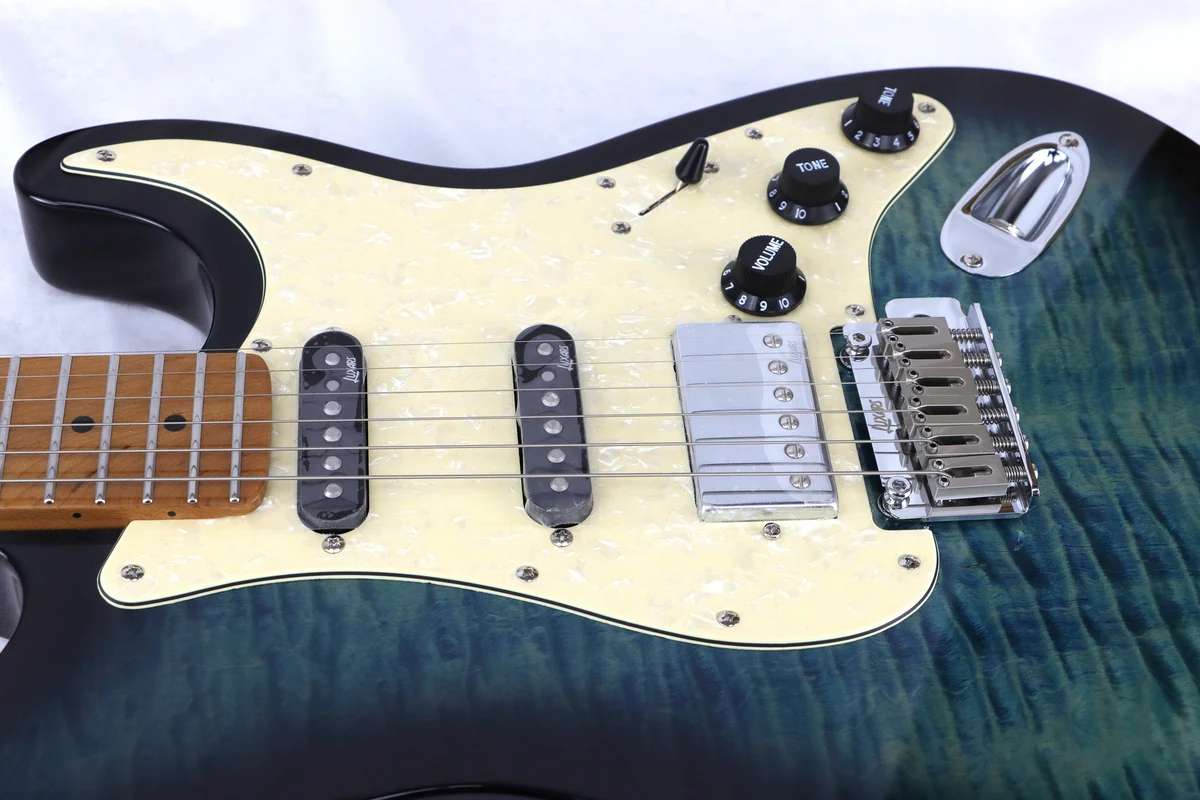
Likewise, two-point does not state whether a particular sample is set floating or resting against the body. Confirm the intended setup with the relevant model information. Keep the bridge classification, setup state and customer’s intended use in separate fields so that a salesperson does not accidentally promise one from the name of another.
| Buying question | Fixed-bridge discussion | Tremolo discussion | Information to request |
|---|---|---|---|
| Is arm-based pitch expression required? | Establish that the customer does not need that function | Identify the declared system and intended use | Exact bridge type and operating guidance |
| Will tuning or strings change frequently? | Review the model and customer’s habits | Discuss those changes in relation to the actual setup | Approved setup information and suitable support |
| What can the store demonstrate? | Check playability and explain the fitted hardware | Demonstrate the system without making unsupported promises | Sample review and handover notes |
| Are particular parts requested? | Check the model-specific specification | Check the system and relevant mounting details | Written compatibility confirmation |
Turn customer language into a useful buying brief
Customers do not always name hardware precisely. Someone asking for “a stable guitar” may mean that they want straightforward day-to-day handling, that they use a particular tuning, or that they intend to make large pitch changes with an arm. Ask what they want to do with the instrument before selecting a bridge category. The answer changes the questions the store should put to the supplier.
Record the intended use without turning it into a performance guarantee. Useful notes include whether arm use matters, whether the customer changes tuning often and whether they expect to change string gauges. Keep these requests alongside the bridge type, rather than assuming that all customers in one musical style need identical hardware.
For an assortment, give each configuration a clear purpose. A store does not need near-identical models that are distinguished only by vague claims. Compare the bridge alongside the neck, pickup arrangement, controls and photographed finish. The S-G25’s declared HSS layout and two-point tremolo can be explained together, while their separate roles remain clear.
Review bridge options for your electric guitar range
Tell LUXARS which customer requirements your range should answer and what product information your sales team needs. Discuss your electric guitar requirements, including bridge questions, intended use and sample-review priorities, before finalising a customer-facing description.
Review the sample as a complete instrument
A bridge is part of the instrument, not an isolated quality label. Inspect the sample’s identification, fitted components and documentation before recording playing observations. Check that the photographs and specification concern the same model and version. If the sample differs from the published description, resolve the discrepancy before using it as the reference for a range.
A repeatable review should record tuning, fitted strings and the sample’s setup state. A person experienced with the relevant system can then assess its operation and the overall playing response under those recorded conditions. Separate observations from assumptions about why they occur. Do not diagnose every tuning concern as a bridge defect or claim a numerical stability result without a defined test.
Changing strings, tuning or setup can change the conditions of the review. Keep a note of who made an adjustment and what was changed. That record helps the next colleague compare the instrument fairly. It also avoids presenting a modified sample as if it necessarily represents the condition of every instrument supplied later.
Plan the handover that the channel can support
The customer’s experience continues after the demonstration. Give staff a clear explanation of the fitted hardware and the appropriate model documentation. Confirm which accessories are included in the particular offer. A pictured tremolo arm or adjustment tool should not be treated as a guaranteed package inclusion without the packing information that supports it.
For online sales, show a genuine bridge close-up and provide the declared bridge type in the specification table. A photograph of headstock tuners should have its own caption. Explain how a buyer can request further setup information, instead of using broad expressions such as “professional hardware” to hide an incomplete description.
Support arrangements should also be confirmed in writing. Do not create a repair entitlement, adjustment promise or warranty period from a general buying guide. The article can help a buyer organise the questions; the applicable offer and model information establish the actual commercial and support arrangements.
Check the bridge information before listing
- Identify the model and exact declared bridge type.
- Keep bridge, tuners, nut and pickup descriptions separate.
- Record the sample setup rather than guessing it from a photograph.
- Clarify whether the intended customer needs arm use.
- Confirm package contents and operating information.
- Resolve any request for replacement-part compatibility.
- Provide consistent staff notes and online specification wording.
- Keep sample observations distinct from performance guarantees.
Frequently asked questions
When should a retailer consider a fixed-bridge guitar?
Consider it when the buyer’s requirements do not call for tremolo-arm operation and the model otherwise fits the customer’s needs. Review the whole instrument and the available support information. A fixed-bridge category is not, on its own, a guarantee about tone or tuning performance.
What does a two-point tremolo specification tell a buyer?
It identifies the declared pivot arrangement. It does not provide every setup detail, mounting measurement or compatibility statement. S-G25 is listed with a two-point tremolo; further requirements should be checked against information for that actual model.
Are locking tuners the same as a locking tremolo?
No. Tuners and bridge mechanisms are different components. S-G25 lists locking tuners separately from its two-point tremolo. Read the bridge and nut specifications before making a statement about a locking or double-locking system.
What should buyers confirm before changing strings or tuning?
Confirm the actual model, intended setup and relevant operating or adjustment information. Record the original conditions of a sample review. Where an adjustment needs experience with the system, arrange suitable support rather than transferring another model’s numerical settings.
What bridge information belongs on a retail product page?
Include the declared bridge type, genuine close-up photographs and clearly separated tuner and nut information. Confirm included accessories and direct customers to the relevant support or enquiry path for further questions. Avoid unverified compatibility or performance claims.
Sources and further reading
- LUXARS S-G25 product specification.
- Fender Stratocaster setup guidance, for general bridge categories and model-specific setup context.
- Continue with the acoustic material guide or acoustic guitar size guide.
Tell us about your market
For an electric guitar range discussion, share your company, market, sales channel, intended customers and bridge requirements. Include the model references and any information needed for demonstration or handover. Contact LUXARS, use WhatsApp +86 13620576554, or email sale@luxarsmusic.com.
 English