
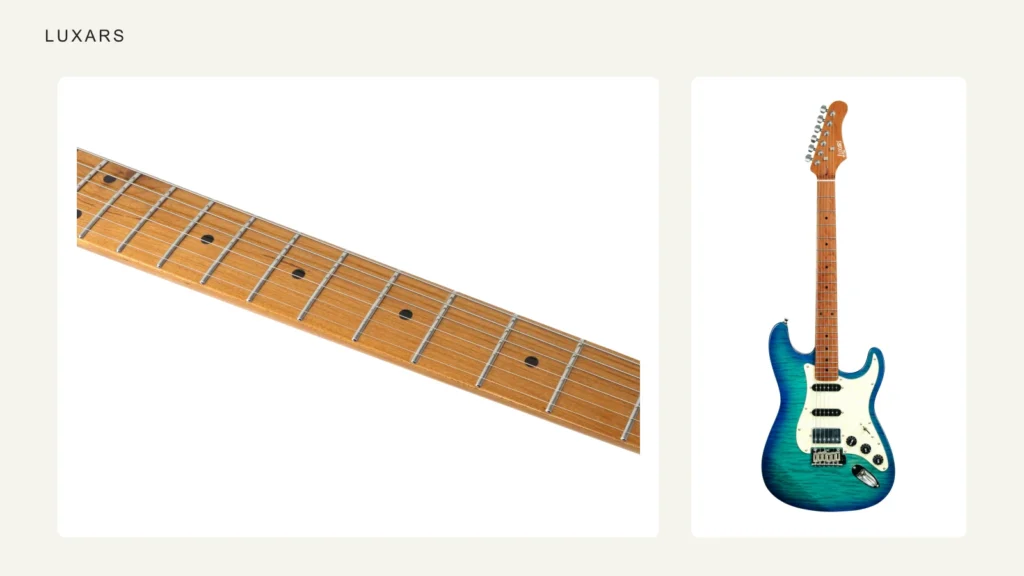
Fingerboard radius describes the curve across the playing surface of the fingerboard. It is one part of how a guitar feels, alongside neck profile, width, frets, strings and setup. For a retailer comparing models, the useful approach is to explain the field accurately, let the customer try their normal playing tasks and keep observations attached to the actual instruments.
Jump to a section
Neck comparison record
Use one record for each instrument so a radius value stays attached to its model, source and playing observations.
Download the blank comparison record (TXT)
How to complete the record
- Copy the stated radius and unit. If a compound range is specified, record both values and their stated positions; a single published value does not establish a compound range.
- Keep neck profile, nut width and scale length in separate fields. Record strings, tuning and sample condition alongside playing observations.
- Compare the records, identify missing information and request the exact model details before writing a product description.
Leave unknown values blank and request details for the exact model and version. Use the model’s approved instructions and a suitable technician for adjustment work.
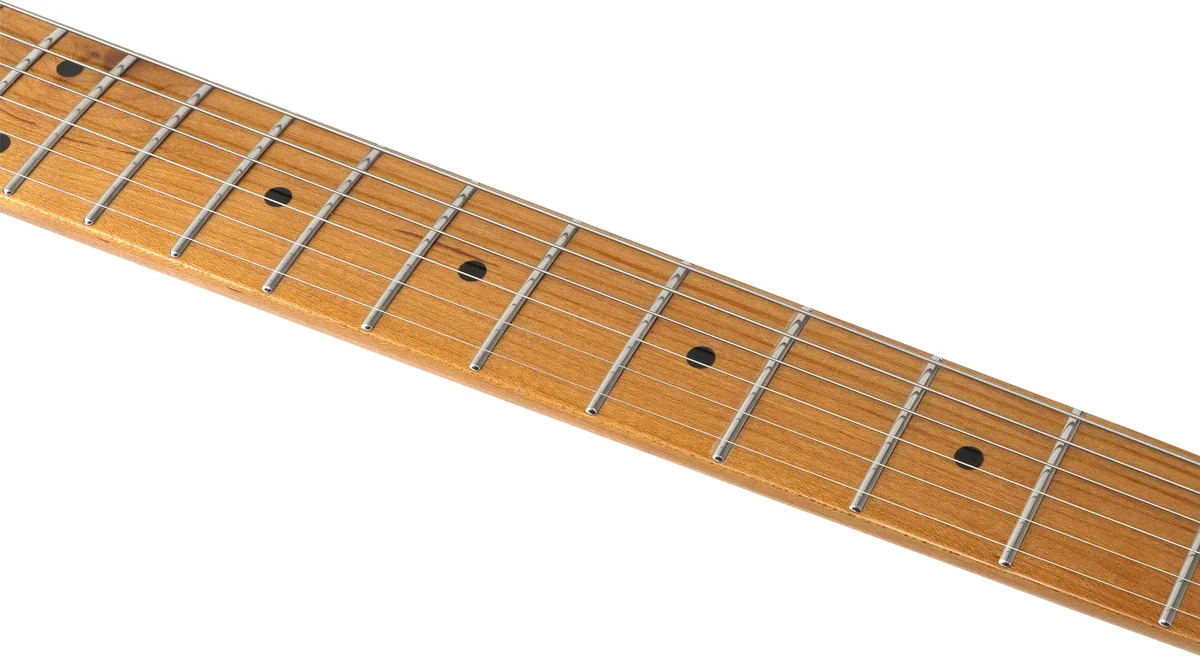
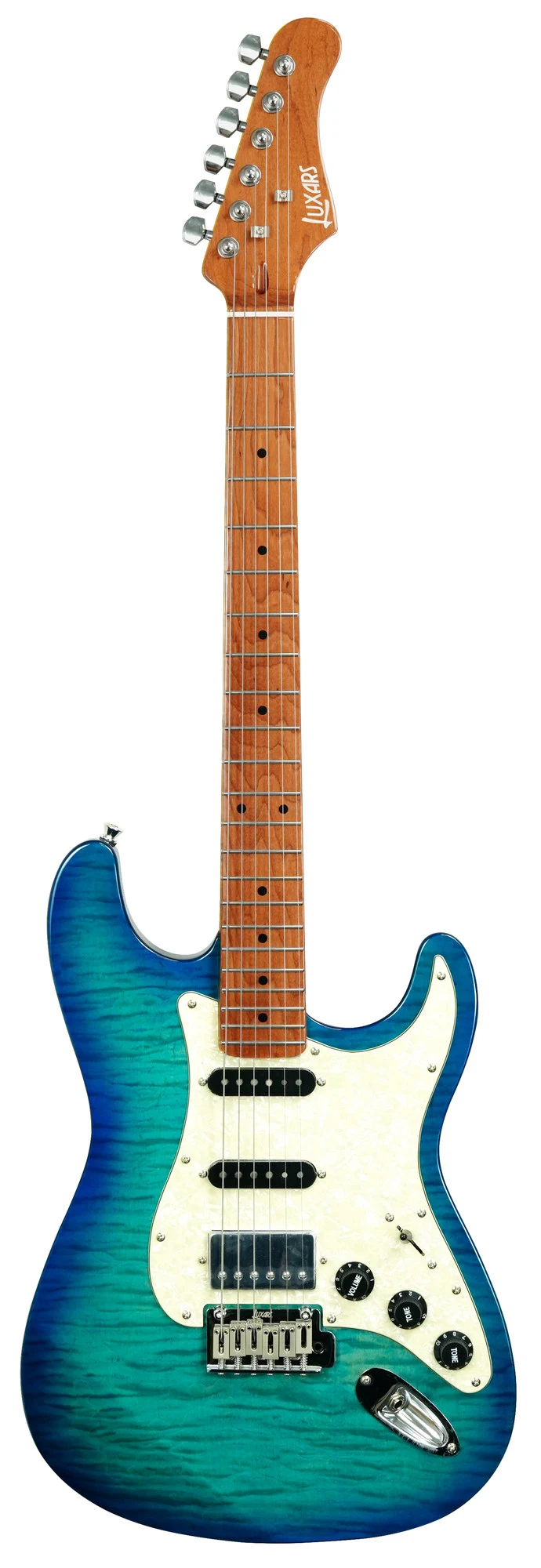
S-G25 product photographs showing the fingerboard and complete instrument. The radius is established by the published specification, not by the photographs.
Explain the measurement without turning it into a ranking
Fender’s fingerboard-radius explanation describes the radius of the circle used to form the crosswise curve. For the same fingerboard width, a smaller radius gives a more curved surface and a larger radius gives a flatter surface. The number is not the fingerboard’s width, the instrument’s scale length or the thickness of the neck.
Those distinctions help answer familiar counter questions. A customer asking for a “slimmer neck” may mean less thickness behind the fingerboard, less width across it or a different feeling when forming chords. Ask them to identify the sensation and compare the relevant parts of the model record. Changing the radius number does not automatically change all those dimensions.
Use radius as a comparison field rather than a quality grade. A preference for a particular curve should be examined with the customer’s own playing tasks. It does not establish that the instrument is more advanced, that the neck is thinner or that every player will find it more comfortable.
Keep the S-G25 fields separate
The current LUXARS S-G25 specification lists a roasted-maple fingerboard with a 9.5-inch radius, a roasted-maple C-profile neck, 22 stainless-steel frets and a scale length stated as 648 mm / 25.5 inches. Each describes a different aspect of the instrument. Preserve the supplier’s stated units in the model record rather than silently rounding or replacing them.
The 9.5-inch field concerns the fingerboard’s crosswise surface curve. C profile concerns the neck shape behind that surface. Fret count identifies the stated number of frets, while scale length gives the model’s nominal vibrating-string length. Together they give a fuller description than any one field alone. Nut width and other dimensions should be requested where they are needed for the buyer’s comparison.
| Field | What it describes | What it does not establish |
|---|---|---|
| Fingerboard radius | Curve across the playing surface | Neck thickness, nut width or fret count |
| Neck profile | Shape of the back of the neck | A complete dimensional drawing from a letter alone |
| Nut width | Width at the stated nut position | Radius or string spacing without further information |
| Scale length | Nominal vibrating-string length | Overall guitar length or body size |
| Fret count | Number of frets stated for the model | Identical reach or feel on every instrument |
Distinguish a fixed radius from a compound radius
A fixed-radius fingerboard uses a stated radius along its length. A compound-radius description indicates that the curve changes along the neck, usually becoming flatter toward the body. Fender’s explanation includes examples of that approach. Those examples explain the terminology; they are not specifications for a LUXARS model.
When a supplier states a compound radius, keep both values and their positions clear. Ask which end corresponds to each value and how the model is specified for setup. Do not convert a single radius field into a compound-radius claim because the fingerboard looks different near the body in a photograph. Perspective and fingerboard width can alter that appearance.
For S-G25, use the published 9.5-inch radius wording. The current field does not state a compound range. If a buyer needs a different radius or another neck configuration, make that a specific product enquiry. A request for an alternative is separate from a promise that the listed instrument already has it.
Model details for this comparison
Open the model specification and request the measurements needed for your comparison.
S-G25
Published model fields
- Neck
- Roasted maple, C profile
- Fingerboard
- Roasted maple, 9.5-inch radius
- Frets
- 22 stainless-steel frets with rounded ends
Request any additional neck dimensions or model-specific setup information needed for the comparison.
Ask about S-G25Demonstrate chords and single-note playing on the actual sample
Invite the customer to play the chords, melodic passages and bends that matter to them. Use their normal position and give them time to compare the neck. Observe the overall experience instead of attributing every reaction to radius. String gauge, action, relief, fret condition and hand position can all affect what the customer feels during the same demonstration.
For an assortment review, identify the samples and note their fitted strings, tuning and general setup. If the guitars have different neck profiles or widths, record those differences. A comparison can still be useful, but it should not be presented as a controlled test of radius when several relevant features differ.
Keep a practical distinction between preference and condition. A player may prefer a different curve even when the instrument is functioning normally. A note that cuts out during a bend, however, should be examined as a playing or setup observation on that sample. It is not enough to label a radius as unsuitable without checking the instrument’s condition and the playing task.
Compare the neck information your customers need
Send LUXARS the model references, customer playing tasks and the neck fields you want to compare. Include radius, profile, width and scale information where relevant. Request a model-specific neck comparison before presenting a radius number as a complete fit recommendation.
Leave adjustment values with the model’s instructions
Radius is relevant to the relationship between the fingerboard and string heights, but a general radius article is not a setup specification. Use the actual model’s instructions and a suitable technician for adjustment work. Fender’s factory settings or another manufacturer’s setup chart should not be copied into a LUXARS product record as approved values.
If an instrument requires attention, record the string, fret position, playing action and observed symptom. This helps a technician distinguish an isolated fret or setup issue from a player’s preference. Review the sample’s condition before making a comparison, and document any adjustments made by the appropriate person.
For distributors, a clear reporting format can make those conversations more precise. Ask partners to identify the model and version, include photographs where useful and describe when the symptom appears. Do not infer a warranty outcome or a replacement commitment from the existence of a radius specification.
Write a product description that preserves the distinctions
Put radius, neck profile, fingerboard material, scale length and fret count in separate fields. Use the exact model’s specification and explain unfamiliar terms near the relevant information. A description such as “roasted-maple fingerboard, 9.5-inch radius” supplies more precise information than an unsupported statement about effortless playing.
Photographs should show the neck and fingerboard clearly, but they cannot establish a radius measurement on their own. Keep the image caption tied to the visible part and the numeric field tied to the specification. This is especially useful when several finishes share a model family and the listing team works from separate image folders.
Frequently asked questions
Does a larger radius mean a more curved fingerboard?
For the same width, it means a flatter crosswise curve. A smaller radius produces more curvature. The radius number describes a circle used for the surface geometry, not the width of the neck.
Is fingerboard radius the same as neck profile?
No. Radius concerns the playing surface across the fingerboard. Profile concerns the shape of the neck behind it. Width and thickness are further fields that may be needed to understand a customer’s fit preference.
Is the S-G25 described as compound radius?
Its current published specification states a 9.5-inch fingerboard radius. It does not state a compound range. Use that wording and request further model information if a different configuration matters to your enquiry.
Can radius alone predict bending performance?
It does not describe the whole playing setup. Review the actual sample, strings, action, relief and fret condition, and have adjustment questions assessed appropriately. Keep a specific playing observation separate from a universal radius claim.
Should retailers publish factory setup numbers from another brand?
No. Use the actual model’s approved setup information. Another manufacturer’s chart can explain the general subject, but its numeric settings do not become LUXARS specifications by being copied into a listing.
Sources and related guides
- Fender’s fingerboard-radius explanation, for surface-curve and compound-radius terminology.
- LUXARS S-G25 product specification, for the model-specific fields used here.
- Continue with the headless guitar compatibility guide or the fixed-bridge and tremolo guide.
Discuss the model and the playing task
Tell LUXARS your company, market, sales channel and the models being compared. Specify which neck dimensions and configuration details your team needs. Request product information, email sale@luxarsmusic.com, or contact WhatsApp +86 13620576554.
 English