
A guitar store should measure relative humidity where instruments are displayed and stored, follow the care instructions for each model, and keep a record of changes. Room readings and closed-case readings answer different questions. If an instrument develops a crack, a lifting joint or a sudden change in playability, pause its demonstration and arrange an assessment before attempting a repair.
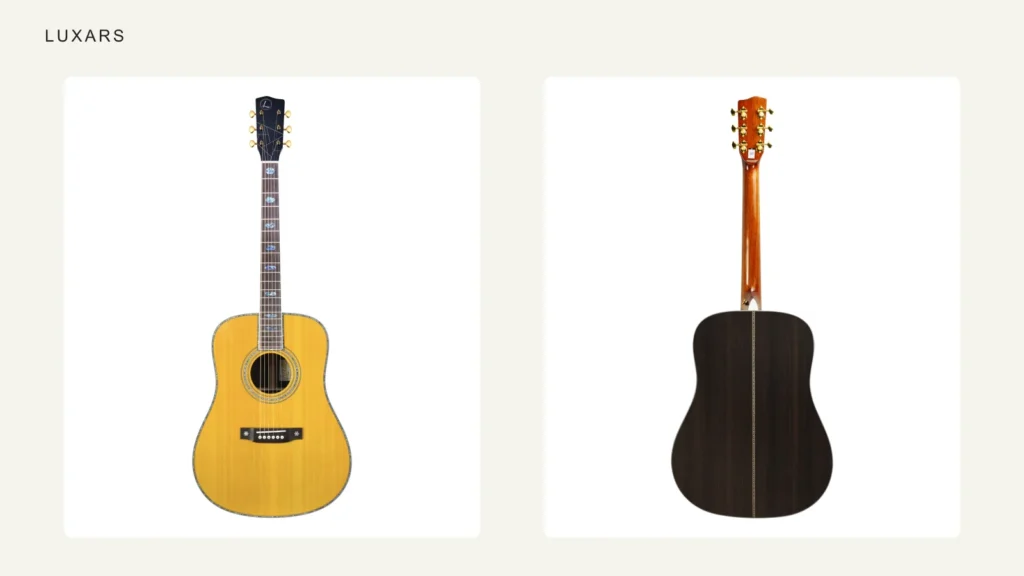
Actual LR5D front and rear photographs. They identify the instrument, without establishing moisture content or a tested storage condition.
Find the target in the instrument’s care instructions
Relative humidity, usually written as RH, describes moisture in the air relative to the amount the air can hold at that temperature. A reading belongs to a particular place and time. The weather report outside your shop cannot establish the conditions around an instrument on the sales floor.
Manufacturers publish guidance for their instruments. Taylor’s humidity guidance recommends 45-55% RH and a digital hygrometer with minimum and maximum readings. Córdoba’s FAQ specifies 45-65% RH for its guitars. These are manufacturer-specific instructions, not a universal LUXARS specification.
For a mixed-brand store, attach the relevant care information to each model’s stock record. Ask LUXARS for the care requirements of the models you carry. Keep instrument guidance separate from the operating instructions for a humidity-control accessory; a device’s stated operating range does not establish every guitar’s care requirement.
Measure the places the guitar actually occupies
List the display area, the stockroom and any cases used for storage. Place a suitable hygrometer in the environment you want to monitor, following its instructions. Record its location so staff can tell which instruments a reading concerns. A sensor moved between a case and a room needs time to respond according to its own instructions.
Review readings when opening the store and after meaningful changes to heating, cooling or storage arrangements. This is a suggested shop routine, not a manufacturer-mandated interval. If your device records minimum and maximum values, preserve those alongside the current reading. They can show a change that happened while the store was closed.
| Record field | What staff should write | Why the distinction matters |
|---|---|---|
| Location | Named display area, stockroom or closed case | Connects the reading to the instrument’s environment |
| Time | Date and time of the check | Allows comparison with operating and storage changes |
| Reading | RH percentage and temperature if measured | Keeps moisture and temperature observations separate |
| Device | Sensor identity and any maintenance note | Makes a questionable reading easier to investigate |
| Response | Action taken and the next check | Gives the next shift a clear handover |
An isolated reading can identify something to check, but it does not establish the history of an instrument. When values appear inconsistent, review device placement and the manufacturer’s accuracy or calibration instructions before making a major environmental change.
If confirmed readings remain outside the applicable instrument guidance, address that environment according to the relevant care instructions. The response may require humidification or dehumidification. Record the action and check the conditions again; a reading returning to the target range does not prove that an existing instrument problem has been repaired.
Prepare care information for your acoustic range
Share the models, display arrangement and storage method with LUXARS. Request model-specific care information so your team can connect its monitoring routine to the instruments it sells.
Separate room control from a case accessory
Room control concerns the air around guitars on open display. A product designed to work inside a closed case has a different operating environment. D’Addario’s Humidipak instructions describe maintaining 45-50% RH inside an instrument case with the lid closed. They also state that Humidipak Maintain is not intended for constant high-humidity environments.
Use that example to check the instructions of the accessory being considered. Identify its purpose, placement and replacement requirements. Do not assume a packet in a guitar case controls an open showroom, or that adding more moisture is the appropriate response to every reading.
For stores that sell humidity accessories, explain the environment the product is intended to control. Give the customer the manufacturer’s instructions with the sale. Keep spare packets or devices identifiable by product rather than treating visually similar accessories as interchangeable.
Keep construction information separate from care claims
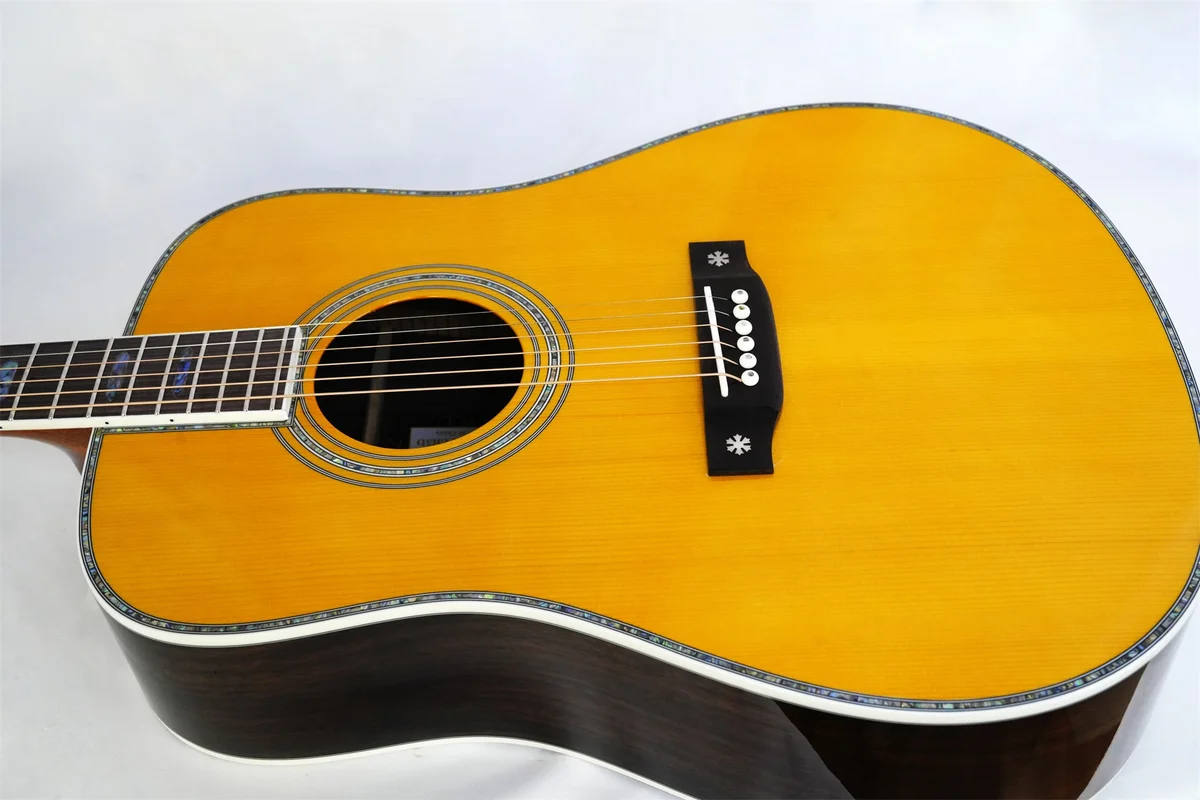
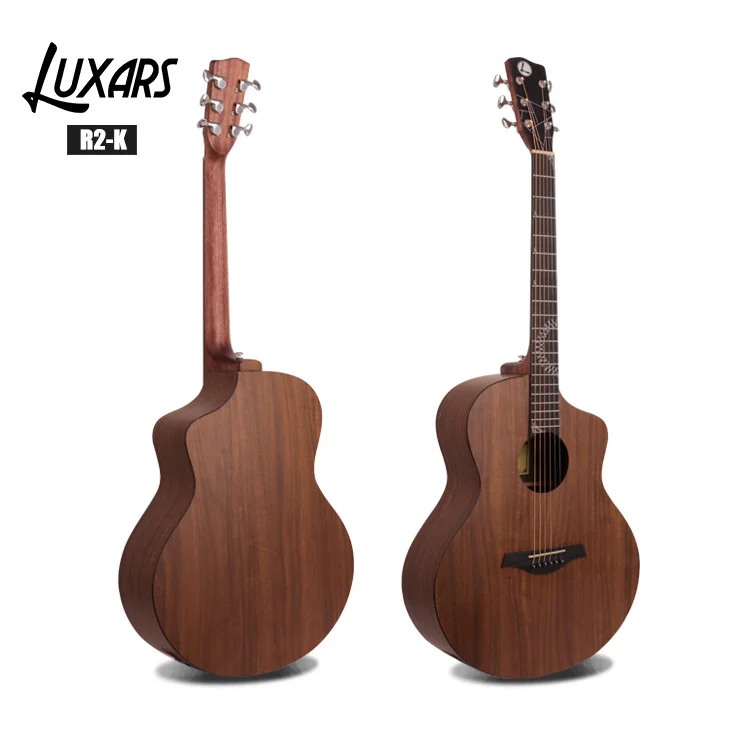
The LUXARS LR5D is listed as a 41-inch all-solid dreadnought with a solid spruce top and solid rosewood back and sides. The R2-K and R2-M have HPL bodies and mahogany necks. Their koa and flamed-maple appearances are surface textures on HPL.
These specifications help identify the instruments in your collection. They do not provide a measured humidity-resistance comparison. An HPL body is not sufficient evidence to describe an entire instrument as immune to environmental changes. Request care instructions for the complete model, including its neck, fingerboard and fitted components.
Keep product photographs in the model record to help staff identify the instrument being checked. A photograph of a normal top or bridge cannot establish its moisture content or prove that a particular storage routine has been effective.
Record changes before choosing a remedy
If a guitar develops a new problem, write down the model, where it was kept, what changed and when it was noticed. Describe the observation precisely: a particular joint lifting, a visible crack or a playing issue at a named string and fret. Include useful photographs without presenting a visual observation as a completed diagnosis.
Separate monitoring from adjustment. A change in action can have more than one cause; turning a truss rod is not a general response to a humidity reading. Have the instrument assessed by an appropriate technician and follow the model’s service guidance. Avoid promising that a humidifier will reverse existing damage or that a particular repair will be covered by warranty.
Keep the instrument’s condition note with the stock record. Before returning it to normal demonstration, document the assessment and any work completed. This makes the handover between sales staff and service staff more useful than an unexplained note saying the guitar was checked.
Questions at the counter
Is one humidity range correct for every guitar?
Use the instrument manufacturer’s guidance. Published ranges can differ, and the operating range of an accessory serves a different purpose. Request LUXARS model-specific information before making a branded care recommendation.
Does a closed case reading describe the showroom?
It describes the environment at the sensor inside that case. Measure the room separately when guitars spend time on open display, and keep the locations identified in your records.
Does an HPL body remove the need for care information?
It does not establish the environmental behavior of every part of the instrument. R2 models also have mahogany necks. Use the complete model’s instructions and avoid unsupported resistance claims.
Should staff repair a new playing issue immediately?
Record the observation and arrange an appropriate assessment first. A reading or photograph alone does not establish the cause or authorize a particular adjustment.
Connect care, construction and storage
Use the HPL and solid-top buying guide to explain construction fields, and the guitar case fit checklist when selecting a storage case. For your LUXARS acoustic collection, keep care instructions with model information rather than adding a universal claim to every listing.
Tell LUXARS about your company, market and acoustic models. Request care and product information, write to sale@luxarsmusic.com, or contact WhatsApp +86 13620576554.
 English