
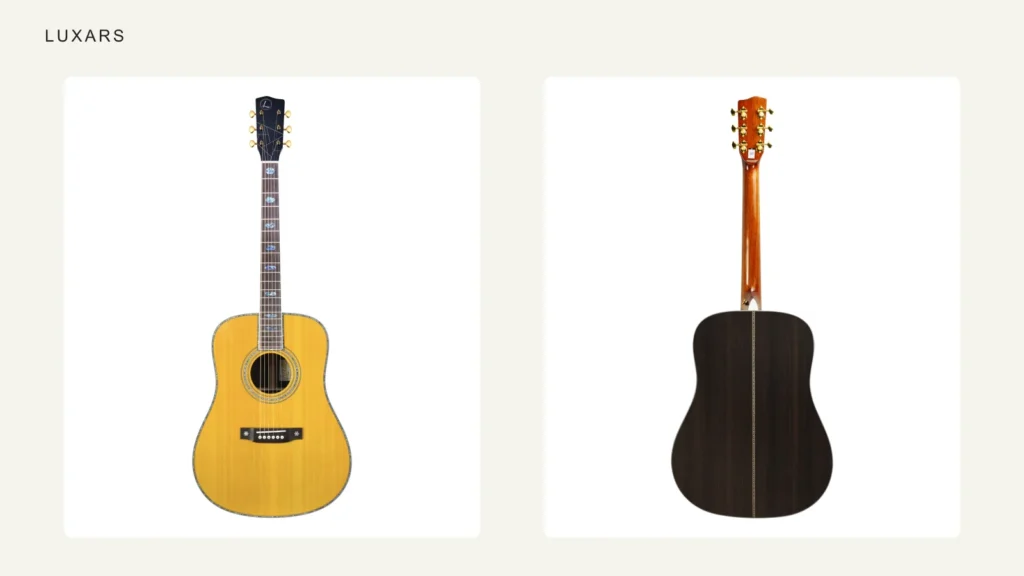
Guitar action is the distance from a fret’s crown to the underside of a string. Neck relief is the neck’s lengthwise curvature, checked with a string held between two fret positions. Record them separately when a customer finds an instrument hard to fret or hears buzzing. The readings describe the sample under stated conditions; they do not, by themselves, identify a fault or establish the correct setup for every guitar.
Actual LUXARS LR5D front and rear photographs
Begin with a repeatable sample check
For a music retailer, the useful result is a clear handover between the salesperson and the person responsible for service. Write down the model, string set, tuning and date before taking readings. Keep the instrument in its normal playing position, support it securely and use the same measuring method when comparing samples.
Check whether the customer’s concern appeared after a string change, a move between environments or a previous adjustment. These observations help decide what to investigate. They are not a diagnosis. If conditions recently changed, follow the instrument’s care guidance before judging a new measurement against an older record.
Measure action from the fret, not the wood
Fender’s explanation of action uses the clearance between the top of the 12th fret and the bottom of the string. A ruler placed against the fingerboard wood would include the fret height and describe a different distance.
Use the measurement location specified for the model. For example, Fender’s Telecaster factory instructions specify an action reading at the 17th fret. Readings taken at different frets should not be treated as the same specification. Write the fret number and whether the string is open or held down. Record bass and treble readings separately, with units. A note saying only “low action” cannot be repeated or compared reliably. A photograph may help another member of staff understand the measuring position, but it should accompany the reading rather than replace it.
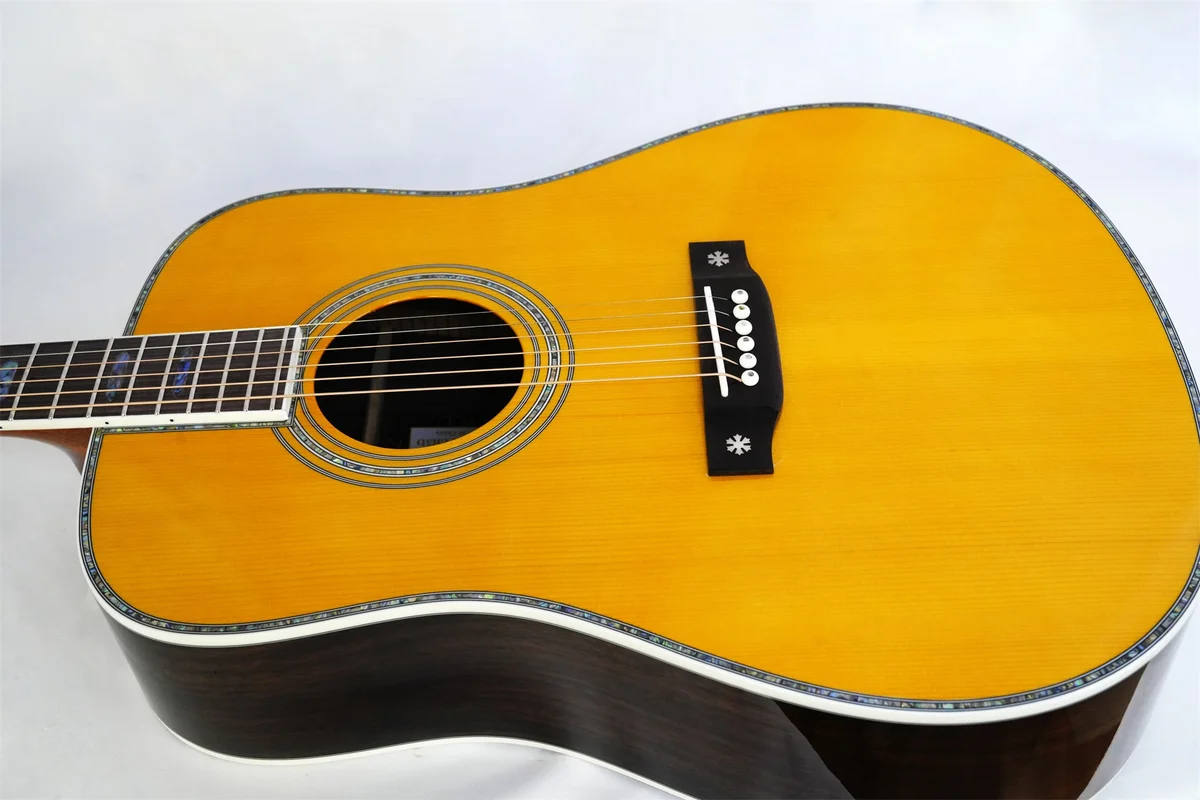
Check relief as a separate measurement
Fender’s relief guide describes holding a string at the first fret and at the last fret or neck joint, then checking clearance above the eighth fret with a feeler gauge. The endpoints and checking position must follow the relevant model instructions.
Do not label this reading as action. Holding the string at two points creates the reference used to inspect curvature. An open-string action reading uses a different condition. Keep both methods visible in the service record so the next person can repeat the check.
| Record | Information to capture | Use at the counter |
|---|---|---|
| Instrument | Model and sample identity | Keeps the observation attached to the right guitar |
| Strings and tuning | Complete set, condition and intended tuning | Explains the state in which the check was made |
| Action | String, fret, open or fretted condition, reading and unit | Describes string clearance at the stated position |
| Relief | String, held endpoints, checking fret, reading and unit | Describes the separate curvature check |
| Playing observation | String, fret area and task that produced the concern | Gives service staff a reproducible symptom |
| Next step | Assessment required and person responsible | Prevents an unexplained adjustment between shifts |
Connect measurements to the actual guitar
The LUXARS LR5D is specified with a bone nut and saddle. The R2-K and R2-M have a different declared construction, with HPL bodies and mahogany necks. These fields identify the instruments. They do not establish a shared action target, relief value or repair procedure.
Ask for the model’s setup guidance when preparing samples for demonstration. Keep any agreed target and its measurement method together. A number copied from another manufacturer’s electric-guitar guide should not become an acoustic-guitar acceptance limit in a purchase order.

Decide whether to demonstrate or refer for assessment
Have the customer try their usual chord changes, picking strength and playing position. Record what happened, including whether a concern appeared on open strings, in a particular fret area or during a bend. Avoid promising that the lowest possible action will suit every player.
If adjustment is needed, pass the instrument and record to a qualified technician. Truss-rod changes, nut work and saddle work have different purposes. An unexplained high reading is not enough reason to choose one of them. After service, repeat the same measurements and playing task before updating the sample’s demonstration status.
For a recent gauge change, use the string-gauge handover guide alongside this record. If storage conditions changed, consult the humidity-care guide. Keeping those circumstances attached to the measurement is more useful than comparing isolated numbers.
Two questions customers often ask
Is relief the same as fingerboard radius?
No. Relief concerns curvature along the neck; fingerboard radius describes the curve across the playing surface. Keep their names and measuring methods distinct on a product sheet.
Does a higher action reading prove the neck is faulty?
No. It records clearance under the stated conditions. Have the full instrument assessed before attributing the reading to a part or promising a remedy.
Prepare model-specific demonstration records
Contact LUXARS with your sample models, intended string sets, tuning and the measurements already taken. Request the applicable setup and service information so your retail team can demonstrate each instrument with a consistent record.
 English