
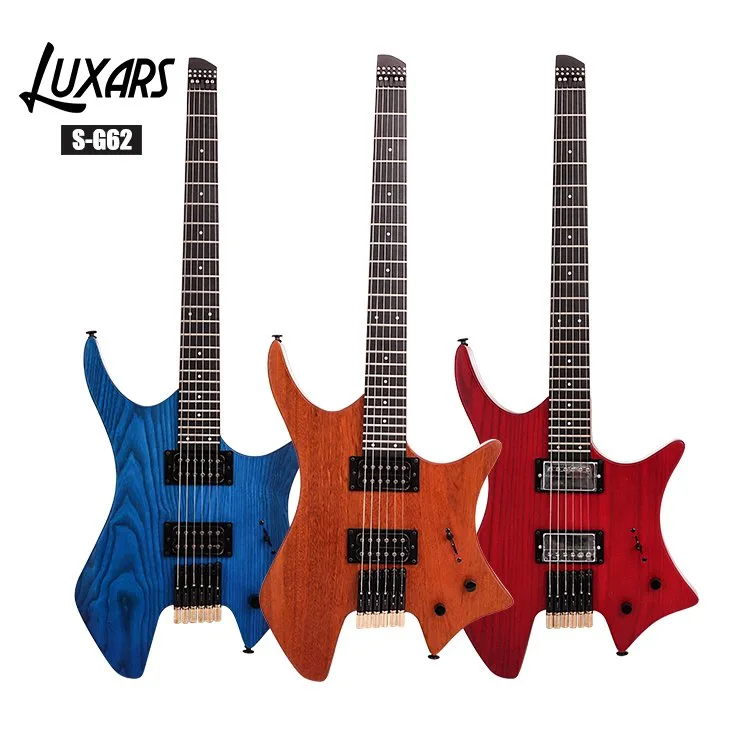
Compare pickup configurations by the functions a customer needs and the controls a retailer can demonstrate. SSS, HSS and HH are useful arrangement codes; they do not specify output, wiring, switching or the sound of a complete guitar. Approve a configuration from its written record and a documented sample check.
1. Read the arrangement code correctly
S means single-coil and H means humbucker. Common codes run from bridge towards neck: SSS indicates three single-coil pickups; HSS indicates a bridge humbucker with middle and neck single-coils; HH indicates two humbuckers. Check the actual model because a code does not describe every circuit feature.
2. Separate general tendencies from promises
Single-coils and humbuckers offer different design choices. A conventional humbucker uses two coils arranged to reduce electromagnetic hum; this does not eliminate every noise source. Output and response also depend on the actual pickup design, installation and signal chain. Avoid claims that all HH guitars are louder or that one layout belongs exclusively to a genre.
3. Match the configuration to a retail role
| Arrangement | Useful buying question |
|---|---|
| SSS | Are the individual positions and any combined sounds relevant to your customers and easy to demonstrate? |
| HSS | Does the bridge-humbucker alternative address a need, and what does the selector actually do? |
| HH | Which positions and controls are available, and is any additional switching confirmed? |
The LUXARS S-G62 photograph is an HH model reference. It does not illustrate SSS or HSS wiring, and the visible pickups do not prove hidden circuit details. Compare each shortlisted model on its own evidence.
4. Request a complete control record
Record pickup identities and positions, active or passive operation, each selector result, volume and tone controls, output connection and any battery requirement. Confirm battery type, access and inclusion when applicable. List coil splitting, coil tapping, phase or series/parallel switching only when the model documentation confirms it; these terms describe different functions.
5. Check every documented function on the sample
Use a known working cable and suitable amplifier. Test each selector position and control through its range; record interruptions, noise and the conditions under which they occur. Compare at sensible matched listening levels and note amplifier settings, effects and strings. This supports a repeatable purchasing decision without pretending to be a standardized laboratory test.
6. Make the listing and demonstration agree
Provide clear photographs of pickups and controls plus a written selector guide. Keep the model, finish and revision consistent across sample, specification, product page and order. Do not add a coil-split label merely because a knob looks like a push-pull control. Name the function only after confirmation.
7. Avoid redundant assortment tiers
Explain why each layout belongs in the range. Two HH models may differ usefully in format or hardware, while different colours of the same configuration do not create separate player levels. Specialist switching needs adequate product information and staff support; a longer feature list alone is not a reason to add a model.
Discuss pickup configurations with Luxars Music
Send the model codes, intended customers and control details you need to sale@luxarsmusic.com. Ask for the current specification and sample review requirements before approving circuit claims.
Related buyer guides
Electric assortment planning · Specification review
Technical references
Fender: pickup arrangement codes · Fender: how humbuckers reduce hum
Explore current product records
Use these product records with the checklist. Then send your shortlist and any missing requirements through the enquiry option below.
 English