
A good acoustic guitar product page helps a buyer answer practical questions before opening another tab or sending a message. It identifies the exact model, shows the instrument from useful angles, explains who it is for, lists confirmed specifications and makes the next step obvious. For an e-commerce seller, the page also becomes a controlled product record that can feed marketplaces, sales teams and customer support.
The objective is not to make the longest page. It is to remove uncertainty in a logical order. The page should separate confirmed facts from promotional language and should never invent materials, dimensions, package contents, availability or performance claims.
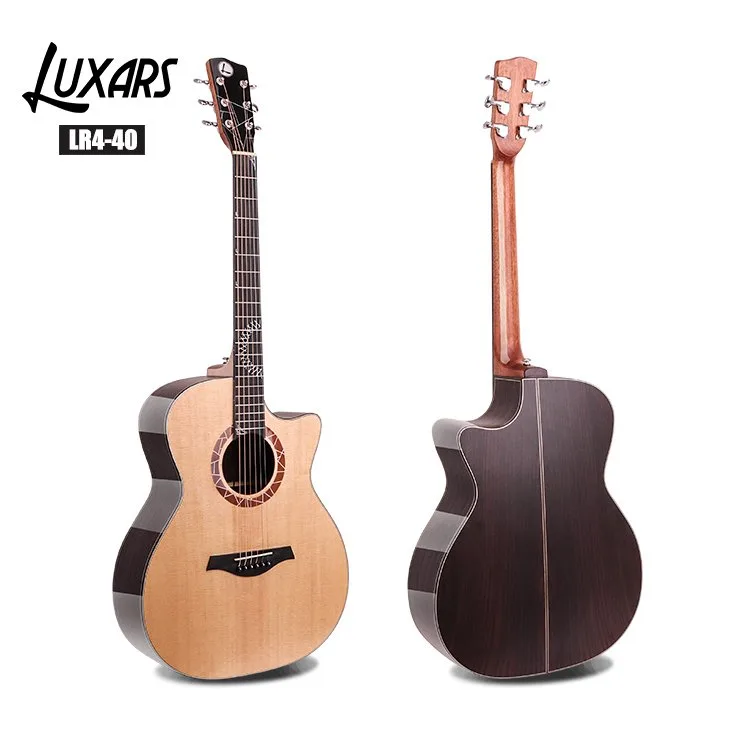
Start with one clear product identity
The first screen should tell the visitor what the product is without relying on a model photograph alone. Use a consistent brand name, model code, category and variant description. If one page represents several sizes or finishes, make the relationship between the parent model and each selectable variant explicit.
- Use the same model code in the title, specification table, image filenames and downstream feed.
- Name the guitar type accurately, such as steel-string acoustic, acoustic-electric or travel-size acoustic.
- Identify handedness, body size and finish when they define a real variant.
- Keep temporary campaign language out of the permanent product identity.
- Do not show a variant option unless its specifications and images can be matched to that option.
Google recommends distinct and consistent URLs for product variants when each variant needs its own indexable identity. The same canonical URL should also be used consistently in internal links and sitemaps. The correct structure depends on the store platform, so the merchandising and technical teams should agree on the model-versus-variant rule before publishing a large catalog.
Build a specification table buyers can compare
Specifications should be scannable and use controlled field names. A paragraph may explain the product, but it should not force a buyer to hunt for scale length, body dimensions or electronics.
| Information group | Fields to confirm | Page rule |
|---|---|---|
| Identity | Brand, model, category, handedness and revision | Match the physical product and sales record |
| Body | Body shape, top, back and sides, finish and dimensions | Name materials only when documented |
| Neck | Neck material, fingerboard, scale length, nut width and fret count | State units and measurement points |
| Hardware | Bridge, tuning machines, strap buttons and visible fittings | Avoid generic claims such as “premium” without evidence |
| Electronics | Pickup or preamp identity, controls and output where fitted | Do not describe an acoustic-electric feature on a purely acoustic model |
| Package | Included bag, tools, cable, manual or other items | Separate included items from optional accessories |
If a value is still under review, leave it unpublished or mark it for internal confirmation. A likely value copied from a similar model can create returns, support questions and feed conflicts. Our guitar product information guide provides a broader field framework for buyers and distributors.
Use an image sequence that answers questions
Product images should work as a sequence, not as unrelated decoration. Begin with a clean full-instrument view, then move from overall form to details that help verify the listed configuration.
- Primary view: the complete guitar against a clean background, with the selected finish represented accurately.
- Front and back: body, neck joint and overall finish coverage.
- Side and body-depth view: shape, cutaway and depth where those details matter.
- Neck and headstock: nut, fingerboard, fretboard markers and tuning machines without misleading brand marks.
- Bridge and controls: bridge, saddle, pickup or preamp controls when present.
- Scale reference: a dimension diagram or clearly described measurements rather than an ambiguous lifestyle photo.
- Package contents: only the items actually included with that SKU.
Google’s image guidance recommends standard HTML image elements, responsive image handling, descriptive filenames and useful alt text. High-resolution images should still be optimized for delivery speed. Alt text should describe what the image contributes, not repeat a list of keywords. For a complete production checklist, see product images and listing data for online guitar sellers.
Answer the buying questions near the decision point
Visitors should not need to infer who the instrument is for or what arrives in the carton. Place concise answers near the specifications and inquiry or purchase action.
- What playing context is this model designed to support?
- Is the guitar full size, compact or another documented size?
- Is it steel-string acoustic or acoustic-electric?
- Which finish and handedness are shown?
- What is included, and what is optional?
- Which measurements should a buyer compare with an existing range?
- How should a distributor or retailer request current commercial information?
Keep these answers factual. Do not promise comfort for every player, universal beginner suitability, a particular tone or stock availability without supporting information. Link size and assortment decisions to a more complete guide such as how to choose acoustic guitars for a retail or distribution catalog.
Design the mobile reading order
Many product pages are assembled on a large screen but read on a phone. On mobile, the title, primary image, model identity, essential specifications and next action should appear in a predictable order. Avoid wide tables that require horizontal scrolling; split fields into labelled groups when necessary. Use short paragraphs, descriptive headings and tap targets that are separated from one another.
Do not hide essential product facts inside image carousels, accordions that fail to open or text embedded in graphics. Important content should remain available as readable HTML. Test the page at narrow widths, with slow loading and with images temporarily unavailable.
Keep visible content and structured data aligned
Structured data can help search systems understand a product page, but it must describe what the visitor can actually see. Google distinguishes pages where products can be purchased from pages that provide product information without direct purchase. Choose the appropriate implementation for the site’s real commercial model rather than adding price, availability or review data that is not maintained.
- Use the visible product name and primary image in the markup.
- Keep SKU, brand and variant relationships consistent with the page.
- Publish price and availability only when they are current and publicly offered.
- Do not create ratings or reviews that do not exist.
- Test markup after template or plugin changes.
Final acoustic guitar product-page checklist
- The title and URL identify one controlled product or variant.
- The selected finish and configuration match the images.
- Every specification is confirmed, labelled and measured in stated units.
- The image sequence covers overall form, details, dimensions and included items.
- Alt text and filenames describe the actual image.
- Mobile users can reach essential facts and the next action without friction.
- Visible content, feed data and structured data agree.
- Commercial claims, price and availability are current or omitted.
- The page links to relevant category, comparison and support content.
Conclusion
An effective acoustic guitar product page is a reliable decision tool. It combines one product identity, complete specifications, a purposeful image sequence, concise buying answers, mobile readability and consistent machine-readable data. That structure helps e-commerce teams publish faster while giving buyers fewer reasons to doubt what they are comparing.
Improve Your Product Listings
Planning acoustic guitar pages for a retail, distribution or e-commerce catalog? Send Luxars Music your target market, channel, product categories and required listing fields through the inquiry form, WhatsApp +86 13620576554 or sale@luxarsmusic.com. Commercial details are handled privately; this B2B website does not display retail prices.
Sources and further reading
- Google Search Central, Designing a URL Structure for Ecommerce Sites
- Google Search Central, Google Image SEO Best Practices
- Google Search Central, Introduction to Product Structured Data
 English