
Classical guitar range planning for music schools and retailers begins with fit, consistency and clear product roles. A school may need instruments that support different learners and remain easy to identify across classes. A retailer needs a range that staff can explain without reducing every decision to age or price.
Size labels such as 1/2, 3/4 and full size are useful, but they are not universal measurements and should not be treated as automatic age recommendations. The practical process is to compare the documented dimensions, let the learner hold and play the instrument where possible, and include the instructor or responsible buyer in the fitting decision.
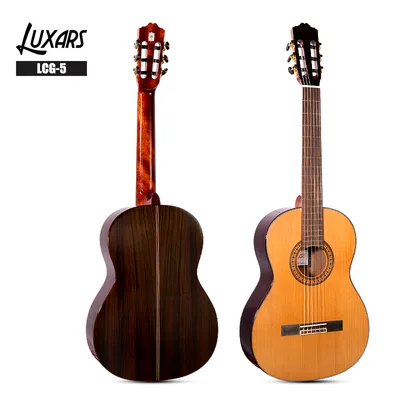
Define the school and retail jobs separately
The same instrument can serve both channels, but the buying criteria may differ. A school often values a repeatable model identity, straightforward replacement, visible asset records and consistent setup across a group. A retailer also needs display clarity, understandable step-up differences and accurate online information.
| Decision area | Music-school priority | Retail priority |
|---|---|---|
| Size | Fit across learner groups and easy model identification | Clear comparison and staff-assisted fitting |
| Specification | Consistency across multiple instruments and repeat orders | Visible differences between entry and step-up models |
| Setup | Playable condition, inspection routine and service records | Reliable demonstration condition and customer handover |
| Data | Asset number, model, size and maintenance history | Product-page fields, images, included items and support answers |
| Support | Replacement strings, cases and issue reporting | Accessories, care guidance and after-sales communication |
Before selecting models, state which job the range must do. A school program, private-teacher studio, general music store and specialist classical retailer may require different size depth, finish choice and service support.
Use size names as categories, not fit guarantees
Manufacturers commonly offer compact, intermediate and full-size classical guitars. Yamaha’s current School Series, for example, includes models described as 1/2-scale, 3/4-scale and full size. That demonstrates a practical three-size structure, but another brand’s dimensions may not match exactly.
- Record total length, scale length, nut width and body dimensions for every size.
- Use the manufacturer’s model code together with the size label.
- Compare seated reach, fretting-hand position and the ability to support the body comfortably.
- Check that the learner can reach the tuning machines and hold the instrument without strain.
- Confirm the instructor’s technique requirements rather than assigning size from age alone.
- Repeat the fit review as the learner grows or the curriculum changes.
A size chart can narrow the options, but it should not replace a real fitting process. For broader category differences, see classical vs acoustic guitar for retail buyers.
Confirm the nylon-string product specification
The range record should distinguish nylon-string classical construction from steel-string acoustic construction. Confirm the actual model rather than relying on a generic catalog description.
- model code, size designation and specification revision;
- scale length, nut width, body dimensions and total length;
- top, back, sides, neck, fingerboard and bridge materials as documented;
- string type and any recommended replacement specification;
- finish, binding and visible identification details;
- tuning-machine type and orientation;
- pickup or preamp details only when the model is electro-classical;
- included bag, tools, manual or other items;
- carton identity and school asset-label location where required.
Do not substitute an acoustic-guitar field list without review. Nylon strings, wider neck proportions, bridge construction and classical playing position create different product and teaching questions.
Plan learner stages without inventing a universal ladder
A school or retailer may use entry, developing and step-up roles, but these roles should be defined by the local program. Avoid assuming that every learner must move through the same price or material sequence.
- Access role: appropriate fit, clear identification and consistent basic setup.
- Continuity role: a stable model for regular lessons, ensemble use or repeat school purchasing.
- Step-up role: documented differences in construction, finish, hardware or response that an instructor and learner can evaluate.
- Electro-classical role: only where amplification is relevant to the program or retail demand, with controls and output clearly explained.
Each SKU should have a distinct reason to exist. Use the framework in how to build a beginner-to-intermediate guitar product range to check for overlapping sizes, finishes and price roles.
Build a practical school quantity mix
Do not forecast quantities from a generic percentage. Use enrollment, current instrument condition, instructor feedback and historical size requests. Separate immediate replacement demand from planned expansion.
- count usable instruments by exact model and size;
- record learners waiting for a better fit;
- identify damaged or uneconomic-to-repair units;
- note shared instruments versus assigned instruments;
- keep a small documented contingency only when the program supports it;
- review the size mix before each enrollment cycle.
For retail, use local enquiry, fitting and sell-through records rather than assuming one size will dominate every market. Our category guide, acoustic, classical or electric: which guitar category fits your market?, helps connect range depth to the actual channel.
Coordinate accessories and care information
A school-ready range is more than the guitar. Confirm the correct bag or case size, string type, support or footstool policy, stand compatibility, identification labels and basic care instructions. Retail pages should state which items are included and which are optional.
Keep replacement parts and maintenance records tied to the model and size. When several instruments look similar, an asset number and model code reduce the risk of fitting the wrong case or ordering an unsuitable string set.
Set receiving and service routines
When a batch arrives, reconcile carton count, model codes, sizes and visible condition before distributing instruments. After appropriate environmental stabilization, check tuning operation, string condition, fret ends, neck and action observations, bridge condition, finish and included items. Record issues by instrument identity rather than reporting that “some guitars” have a problem.
- asset or serial reference;
- model and size;
- received date and condition;
- setup or repair action;
- string replacement record;
- assigned class, learner or storage location where appropriate;
- issue photos and communication reference;
- return-to-service date.
These records support fair comparison between models and make repeat orders more informed. They do not replace a qualified technician’s assessment where structural or safety concerns exist.
Avoid common range-planning mistakes
- Do not assign guitar size from age alone.
- Do not assume every manufacturer uses the same 1/2 or 3/4 dimensions.
- Do not mix steel-string and nylon-string replacement information.
- Do not create step-up tiers without a documented difference.
- Do not treat finish choice as more important than fit and setup.
- Do not publish materials, dimensions or included items from an older specification.
- Do not distribute a school batch before identity and condition are recorded.
Final classical guitar range checklist
- The channel and learning program are defined.
- Every size has documented dimensions and a real range role.
- Fit is reviewed with the learner and instructor where possible.
- Nylon-string specifications are complete and model-specific.
- Entry, continuity and step-up roles do not overlap unnecessarily.
- Quantity planning uses current enrollment, condition and demand records.
- Cases, strings and care information match each model and size.
- Receiving, asset identity and service history are traceable.
Conclusion
A reliable classical guitar range is built around real users and controlled records. Define the school and retail jobs, compare documented dimensions, fit learners carefully, confirm nylon-string specifications, assign each SKU a clear role and maintain receiving and service histories. This approach gives buyers a range they can explain, support and improve over time.
Plan a Classical Guitar Range
Planning classical guitars for a school, retailer or regional distribution program? Send Luxars Music your target market, learner groups, preferred size structure and required product-information fields through the inquiry form, WhatsApp +86 13620576554 or sale@luxarsmusic.com.
 English