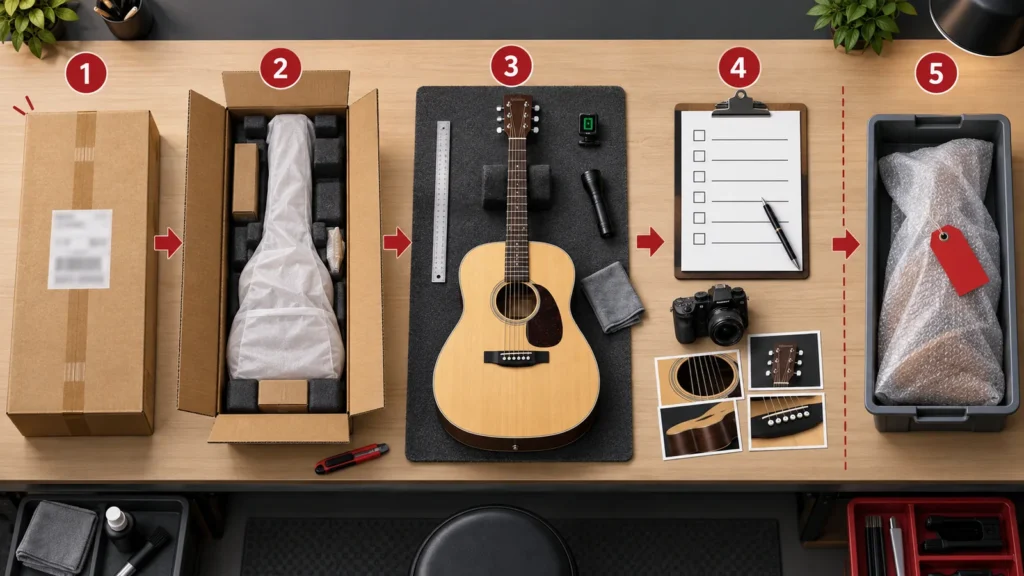
A receiving inspection should do more than decide whether a carton looks damaged. It should connect the delivered guitars to the purchase order, record the condition before evidence is disturbed, separate transport exceptions from product questions, and give the supplier enough information to respond without repeated clarification.
The short answer is to prepare the receiving area before arrival, verify shipment identity and carton count, photograph exterior conditions, open cartons in a controlled sequence, confirm model and package contents, inspect a defined sample of instruments, quarantine exceptions and send one structured report. If visible damage may involve a carrier or insurer, preserve the original carton, inner protection and affected goods until the applicable procedure is confirmed.
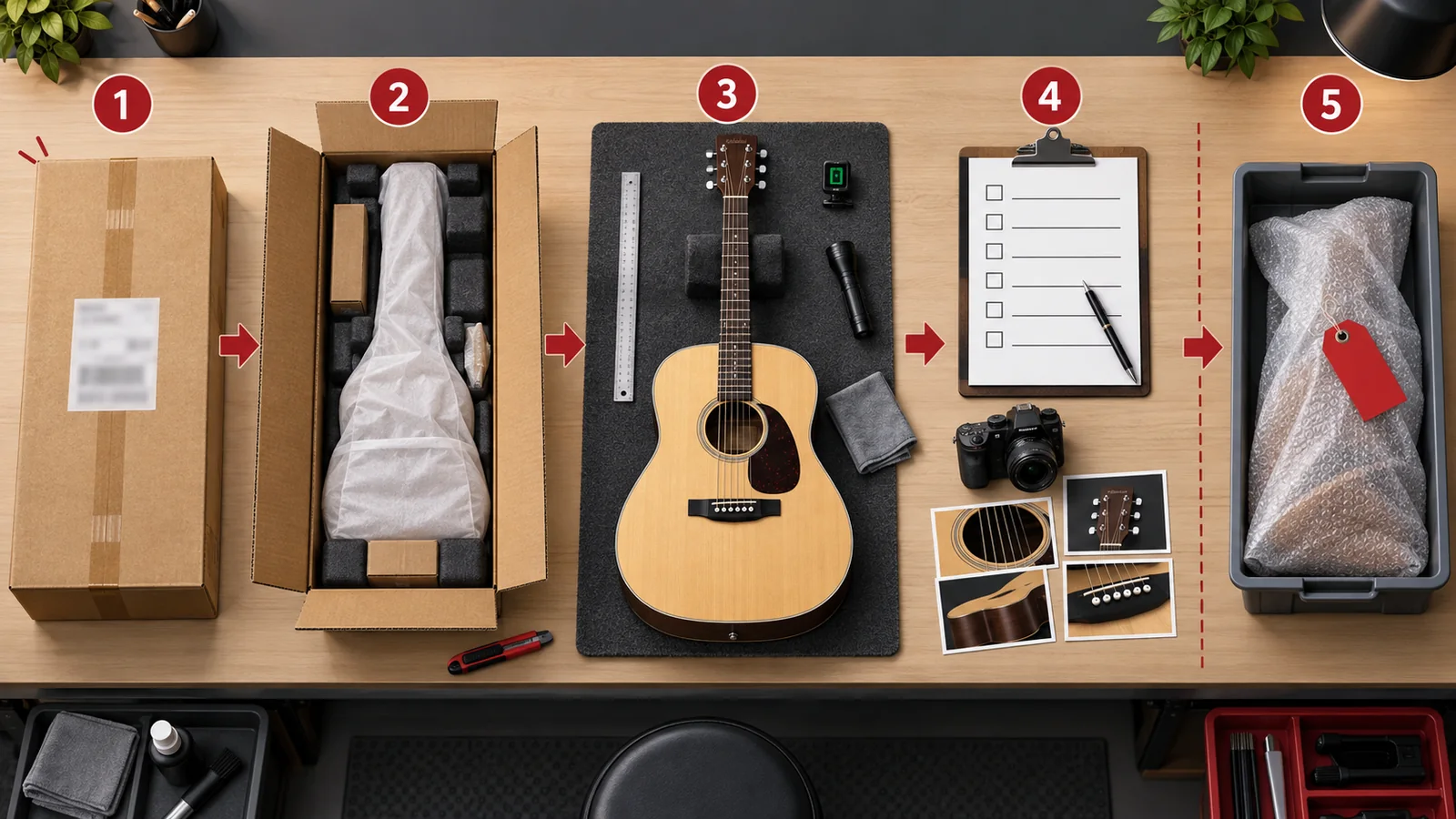
Receiving begins before the shipment arrives
The distributor should not wait for a truck or parcel courier before deciding what to inspect. Build a receiving file from the final purchase order, commercial invoice, packing list, model allocation, approved specification, sample record and packaging reference. Identify who can accept the shipment, who performs the technical check and who communicates an exception.
Prepare a clean, padded and well-lit inspection area. Useful equipment may include a camera, tuner, accurate ruler, flashlight, clean cloth, gloves where appropriate, basic setup gauges, amplifier or test system for electric instruments, barcode scanner and clearly marked quarantine space. The tools should match the checks actually agreed; an instrument should not be adjusted merely because a tool is available.
Define the sample plan before arrival. The plan may cover every carton count and label while opening a smaller, risk-based group of units for detailed inspection. Order size, model mix, finish variation, route, packaging method and previous findings all affect the plan. Do not present one fixed percentage as a universal rule. If a contract, inspection standard or customer procedure defines sampling, use that requirement.
Verify shipment identity before opening cartons
Compare the delivery reference with the expected shipment. Record arrival date and time, carrier or forwarder reference, vehicle or container information where relevant, carton or pallet count, visible seal condition and the person receiving the goods. If the count does not match the documents, note the difference before breaking down the shipment.
Check that carton labels identify the brand, model or SKU, quantity, finish, carton number and any handling marks required by the order. The labels should reconcile with the packing list. A wrong label can create an inventory problem even when the guitar itself is correct.
Do not treat a clean exterior as proof that every instrument is acceptable. Concealed movement or pressure can occur without obvious puncture. Conversely, a scuffed carton does not automatically mean the guitar is damaged. Record the facts first and inspect according to the plan.
Document exterior condition before unloading or opening
Photograph the shipment in context, then move closer. Useful exterior evidence includes:
- the full pallet or group of cartons;
- every side of a visibly affected carton;
- corners, seams, punctures, compression, moisture or opened areas;
- pallet wrap, straps and edge protection where used;
- the shipping label and carton identifier;
- the relationship between the damaged area and carton orientation;
- the delivery document notation where applicable.
Avoid taking only a close-up that cannot be connected to a carton. Use one wide view, one label view and focused detail images. Keep original files rather than sending only screenshots through chat.
Carrier procedures differ, so use current local instructions. FedEx and UPS claim guidance both emphasize keeping damaged contents and original packaging and providing photographs. DHL Freight guidance similarly calls for packaging and damage photographs and advises retaining affected goods and packaging for possible inspection. These references explain why evidence must be preserved; they do not replace the actual contract, insurance or carrier terms for a particular shipment.
Open cartons in a controlled sequence
Choose opening units that represent the model mix, different pallet or carton positions and any visible concern. Photograph the carton before cutting tape. Open along the intended seam with the blade kept away from the guitar. Record the inner protection before moving it.
Check whether the inner package has shifted, collapsed, become wet or allowed accessories to move. Photograph support around the body, neck and headstock. If a hard case or bag is present, record its position and condition before opening it. Keep each instrument connected to its carton number during the review.
Do not dispose of foam, paper, bags or inserts during inspection. When an exception is found, the material arrangement may help distinguish a packing problem, handling event or unrelated product issue. Even for accepted units, a few complete pack-out records are useful for comparison with the approved packaging reference.
Allow for environmental transition before judging setup
Guitars can respond to changes in temperature and humidity during transport. A receiving team should record the arrival environment and avoid immediate, aggressive setup conclusions after a major climate transition. The appropriate stabilization approach depends on the route, package, instrument and local conditions; agree it with the supplier or a qualified technician rather than applying one fixed waiting time to every shipment.
This does not mean delaying documentation. Exterior damage, carton identity, missing items and obvious breakage should be recorded promptly. It means separating those findings from setup observations that may change as the instrument stabilizes.
If adjustments are performed, record the original and final condition, method, tool and responsible person. Otherwise the supplier cannot determine whether a measurement describes the delivered guitar or the instrument after local work.
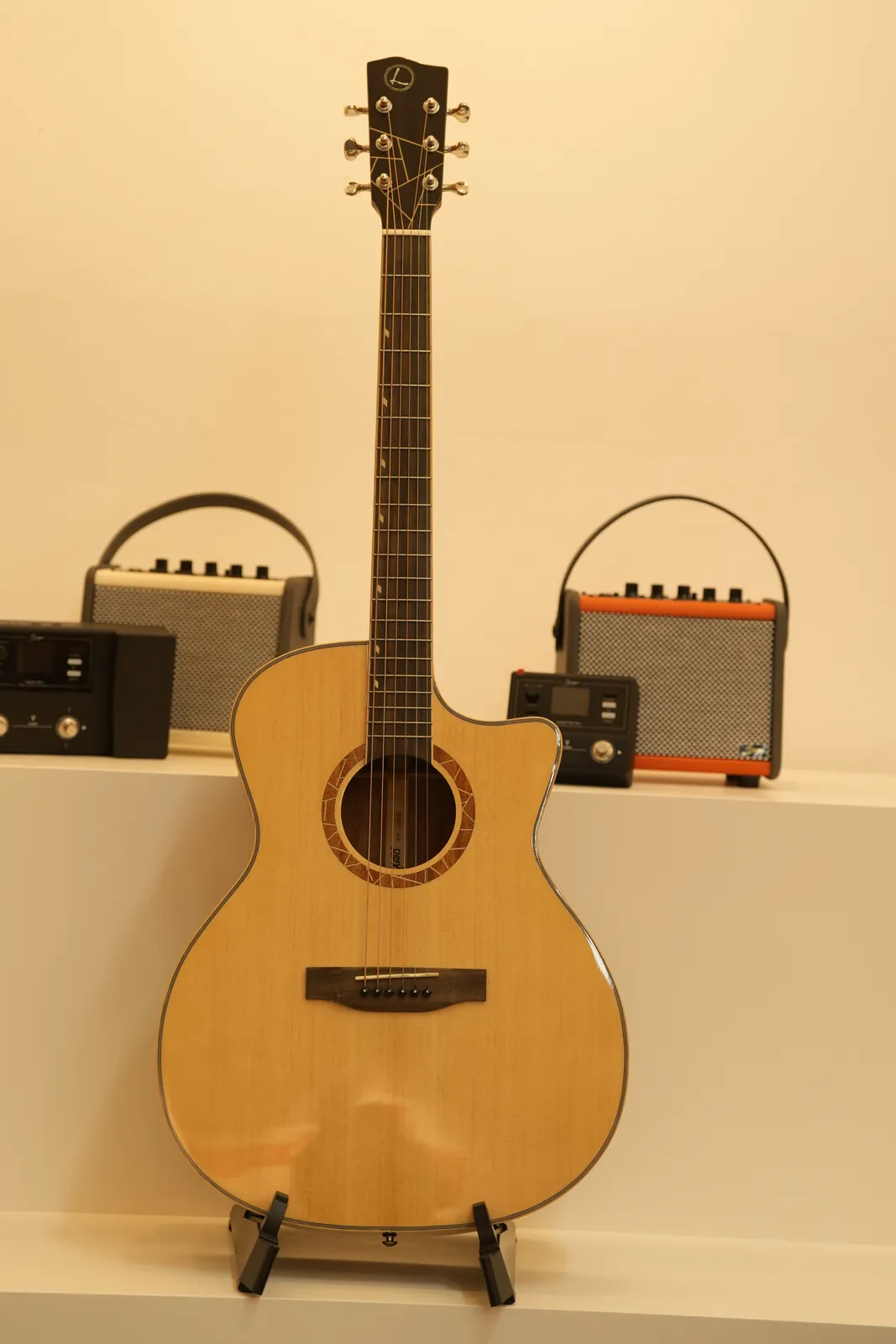
Confirm product identity and package contents
For every detailed-inspection unit, confirm:
- model code and guitar category;
- finish or colour;
- handedness and visible configuration;
- serial or batch field where applicable;
- unit label and carton label relationship;
- included bag, cable, tools, manual or accessories;
- any ordered branding, barcode or market label;
- visible match with the approved sample and specification revision.
Count accessories before they are moved away from the instrument. Missing items should be recorded by unit or carton, not only as a shipment total. If an optional item appears in a product image but was not part of the order, use the purchase record as the authority rather than assuming it is missing.
Inspect workmanship and condition systematically
Use the same sequence for each selected guitar so results can be compared. Begin with the complete front, back and side view. Then check the body, neck, fingerboard, frets, nut, bridge, tuners, joints, binding, finish edges, hardware and labels. Neutral lighting helps reveal finish issues without creating misleading colour differences.
Record the location and nature of any observation. “Small finish mark, bass side lower bout, approximately 12 mm from binding” is more useful than “cosmetic defect.” Include a full-guitar image, a location image and a close-up. Add a ruler only when it can be positioned without touching or damaging the finish.
Do not use photographs to confirm hidden materials or construction. A receiving image can show whether the appearance matches the approved reference, but material and structural claims must come from the controlled specification.
Check setup and playability as connected observations
After appropriate stabilization, tune the guitar and record the string condition and tuning used. Review neck relief, action, nut behaviour, fret condition and intonation where applicable as connected factors. Play every fret on every string at a consistent attack. Note persistent buzz, dead notes, choking or sharp fret ends with the string and fret location.
Acceptance values should come from the model requirement, not a number copied from another brand or guitar type. Classical, steel-string acoustic and electric guitars have different geometry and use expectations. If a guitar needs a normal setup correction, record it separately from structural, fret or component concerns.
Check tuning machines through a useful range and look for loose mounting points, uneven resistance or nut binding. Review bridge and saddle condition without performing irreversible work. If multiple units show the same pattern, stop and assess whether the sample plan should expand.
Add category-specific function checks
Acoustic and classical guitars
Confirm whether the guitar uses steel or nylon strings and compare it with the ordered category. Inspect the bridge area, top, heel and neck joint. Listen for internal rattles or loose parts. Play across the expected dynamic range. When electronics are included, test the pickup, preamp, controls, tuner and output through a known system.
Do not describe a classical guitar as simply a softer acoustic. Nut width, scale, string type, neck feel and intended market role may differ. Receiving records should preserve the ordered category and model definition.
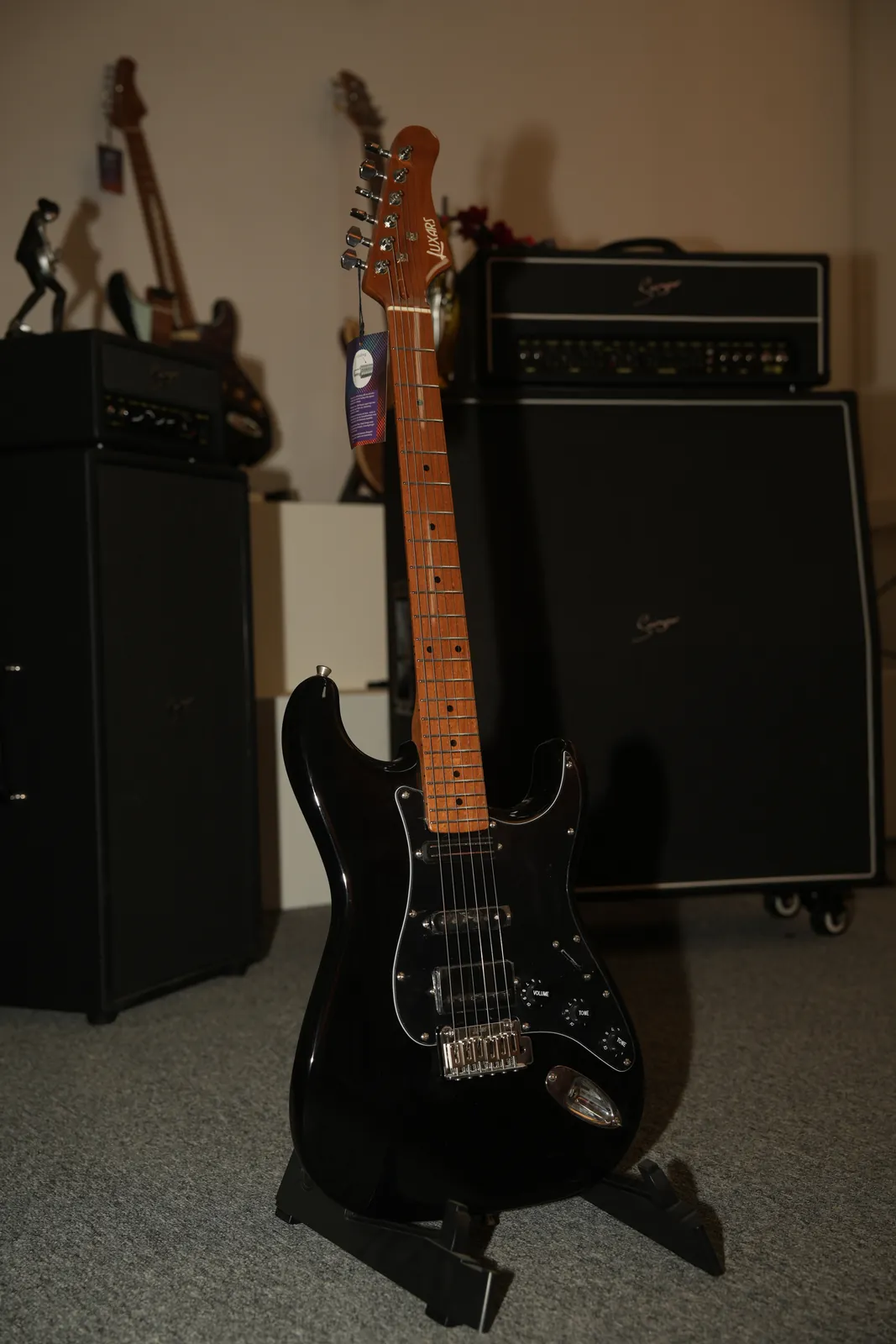
Electric guitars
Use a known cable and suitable amplifier or test system. Test every pickup selector position, volume and tone control, output connection and documented onboard function. Note intermittent output, unexpected control behaviour or abnormal noise while recognizing that some background noise depends on pickup design and the electrical environment.
Check the bridge and tremolo only within the intended operating range. Confirm detachable parts and batteries against the package-content list. A visual match is not a substitute for a complete control test.
Separate transport damage, product nonconformity and local setup
An effective report classifies findings by evidence, not by blame. Three broad groups are useful:
| Finding type | Typical evidence | Immediate handling |
|---|---|---|
| Transport or packaging exception | Exterior impact aligned with inner movement or damage; crushed/wet/punctured packaging | Preserve complete packaging, note delivery condition, quarantine and follow carrier/insurance procedure |
| Product or order nonconformity | Wrong model, finish, component, label, missing item or repeated workmanship issue without transport evidence | Link to specification and purchase-order field; quarantine affected units and notify supplier |
| Setup or environmental observation | Relief, action, tuning or fret response that may be influenced by transit/climate | Record as received, stabilize appropriately, measure and document any authorized adjustment |
| Handling or opening damage | Cut, impact or mark introduced during receiving | Record immediately and keep separate from supplier/carrier findings |
This classification is provisional until the evidence is reviewed. Do not repair, dispose of or reship affected goods if doing so would remove evidence required by the carrier, insurer or supplier. Take reasonable steps to prevent further damage and store quarantined units safely.
Organize a Receiving Review
Receiving an acoustic, classical or electric guitar order and need clearer product information? Send LuxarsMusic the model reference, order document, carton number and a structured description of the issue. Contact Us through the inquiry form, WhatsApp +86 13620576554 or info@luxarsmusic.com. Do not send only a close-up; include the full unit, carton and label context.
Build one evidence package for each exception
A useful exception report normally contains:
- purchase order and shipment references;
- model, finish, serial or batch field and carton number;
- quantity received, quantity inspected and quantity affected;
- exterior carton photographs;
- inner packaging photographs before removal;
- full-instrument views and detailed location photographs;
- package-content or label discrepancy;
- measurements and test method where relevant;
- whether the unit was adjusted, played, repaired or moved;
- requested next step and contact person.
Use stable filenames such as shipment-carton-model-unit-view rather than a collection of “IMG” numbers. Keep the original photographs. A shared spreadsheet or issue log can track status, but it should link to evidence rather than compress every image into a messaging thread.
Report repeated findings in a table. If five inspected units show the same issue, show the count and locations. If only one unit is affected, do not imply the whole order is defective. The supplier can respond faster when the denominator and sampling method are clear.
Quarantine and disposition
Mark affected units so they cannot enter saleable inventory. Keep them in a safe environment with the related packaging. Record who moved or opened each unit. For minor questions, the supplier may request additional inspection; for repairable issues, a qualified technician may be involved after authorization; for transport damage, the carrier or insurer may require access.
Possible dispositions include accepted, accepted after documented setup, reworked with approval, held for more information, used for parts where agreed, returned or otherwise resolved under the commercial agreement. Do not decide a financial remedy inside the technical inspection record. First establish identity, condition and evidence; then handle credit, replacement or claim terms through the responsible commercial process.
Turn receiving data into prevention
Receiving information is useful beyond one claim. Review patterns by model, finish, carton position, package revision, route and issue type. A repeated missing accessory may point to the package-content control. Repeated movement near the headstock may require a support review. A high number of false alarms may mean the acceptance criteria or receiving training is unclear.
Share closed-loop feedback with purchasing and product teams. Update the approved package or specification only after the change is reviewed. Keep the previous revision so repeat-order discussions can identify what changed and why.
Common receiving mistakes
- opening damaged cartons before photographing them;
- separating a guitar from its carton number;
- discarding inner packaging before a claim decision;
- adjusting the guitar before recording the delivered condition;
- using a different inspection sequence for every unit;
- reporting only close-up photographs with no model or location context;
- calling one observed issue a shipment-wide result without stating the sample;
- mixing missing accessories, transit damage and setup into one category;
- repairing or reshipping quarantined goods before authorization;
- sending several unstructured messages instead of one evidence package.
Frequently asked questions
Should every guitar in a wholesale shipment be opened and inspected?
That depends on the agreement, order size, model mix, route, risk and previous results. Count and label checks may cover every carton, while detailed product checks use an agreed sample. Expand the sample when repeated or serious findings justify it.
What should be photographed before a damaged carton is opened?
Photograph the shipment context, every side of the carton, the affected area, corners and seams, shipping label and carton identifier. Then photograph the inner packaging in place before removing the guitar.
Can the receiver discard packaging if the guitar is clearly damaged?
Not until the applicable carrier, insurer and supplier procedure is confirmed. Major carriers may require the original carton, cushioning and contents for photographs or inspection. Preserve the complete package while the case is open.
How should setup issues be reported after a long shipment?
Record the as-received condition, environment, tuning, string condition, measurement method and any stabilization period. If an adjustment is authorized, record before-and-after values and the person who performed it.
What information helps a supplier respond fastest?
Provide the order and shipment reference, model, finish, serial or batch field, carton number, inspected and affected quantities, full and detailed photographs, measurements or function test, package condition and requested next step.
When should affected guitars be quarantined?
Quarantine when an instrument may be damaged, nonconforming, incomplete or needed for inspection. Keep it clearly identified and prevent repair, resale, disposal or further transport until disposition is agreed.
Conclusion
A receiving inspection is most useful when it preserves evidence and connects every finding to the correct order, carton and guitar. Prepare before arrival, document the exterior, open cartons in a controlled sequence, confirm identity and contents, inspect function systematically, separate different types of exceptions and keep affected goods available for review.
This approach protects both buyer and supplier. It avoids exaggerated shipment-wide conclusions, shortens clarification and turns receiving observations into better product, packaging and order records for the next shipment.
Send a Structured Product Inquiry
LuxarsMusic has worked with guitar product and channel requirements since 2016. If you distribute or retail acoustic, classical or electric guitars and accessories, tell us your market, sales channel and the product information you need. For an existing order question, include the relevant model and structured evidence. Send Your Requirements through the inquiry form, WhatsApp +86 13620576554 or info@luxarsmusic.com. Commercial details are handled privately; this B2B website does not display retail prices.
Sources and further reading
- FedEx, “How Do I File a Claim for a Missing or Damaged Package?”
- UPS, “Supporting Documents Required for Claims”
- DHL Freight, “How to Prepare a Claim”
- LuxarsMusic, “How to Evaluate Guitar Specifications Before Placing a Wholesale Order”
- LuxarsMusic, “How to Inspect and Approve a Guitar Sample Before a Wholesale Order”
Related Buyer Guides
Continue your review with our guides to shipping packaging guide, sample inspection checklist, guitar specification review.
 English