
Nut width measures the width of the nut across the neck. String spacing describes the positions of the strings at a stated location, commonly the nut or bridge. They are related, but they are not interchangeable specifications. For a retailer helping a customer compare handfeel, record both the measurement location and the endpoints before using a number to recommend a model.
Jump to a section
Record nut width and string spacing separately
Use a blank record to collect the missing dimensions. Add the exact model and version, measuring points, units, date and source before comparing results.
- Identify the model and version, then record nut width across the outside edges.
- Record outer-string spacing at the nut and bridge separately, naming the strings, measuring points and center-to-center or edge-to-edge method.
- Keep the source and units with each value. Leave unavailable measurements blank and request confirmation.
The file contains empty fields and measurement prompts. It supplies no LUXARS model dimensions or compatibility approval.
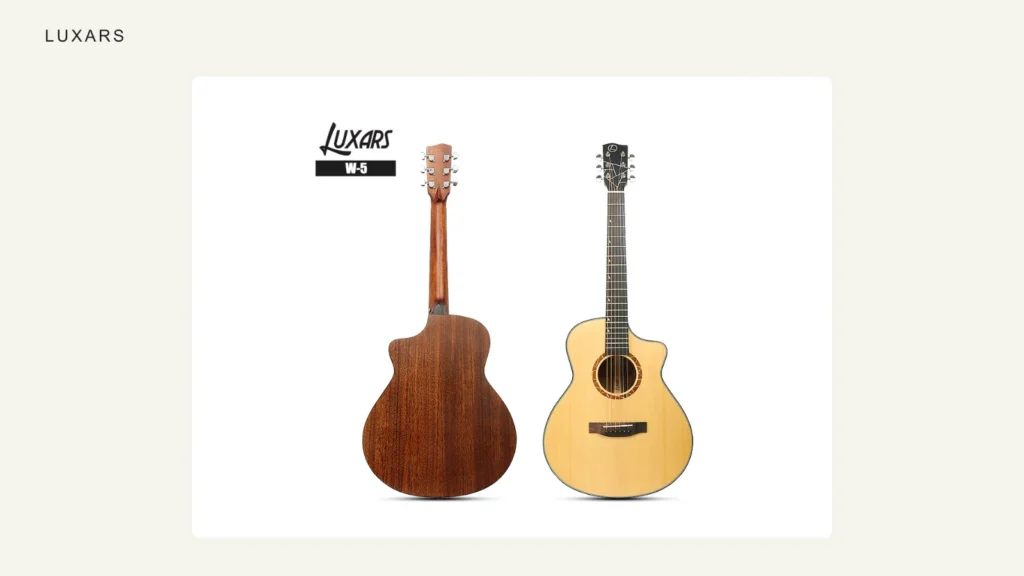
Actual LUXARS W-5 front and rear product photographs
Give each width a clear name
“Wide neck” can mean several things in a customer’s description. Ask whether they want more room between strings for fretting, more room for the picking hand or a different neck shape against the palm. These needs can lead to different comparisons.
Taylor’s discussion of handfeel treats neck width at the nut as one factor alongside neck profile and other design choices. Use that distinction in the shop: a width field cannot describe the entire experience of holding an instrument.
Nut width is an outside-edge measurement. An E-to-E span is a string-position measurement. A specification saying only “spacing” also needs to identify whether it refers to the nut or the bridge and how the endpoints are defined. Do not silently compare a bridge reading with a nut reading.
Record the spacing method
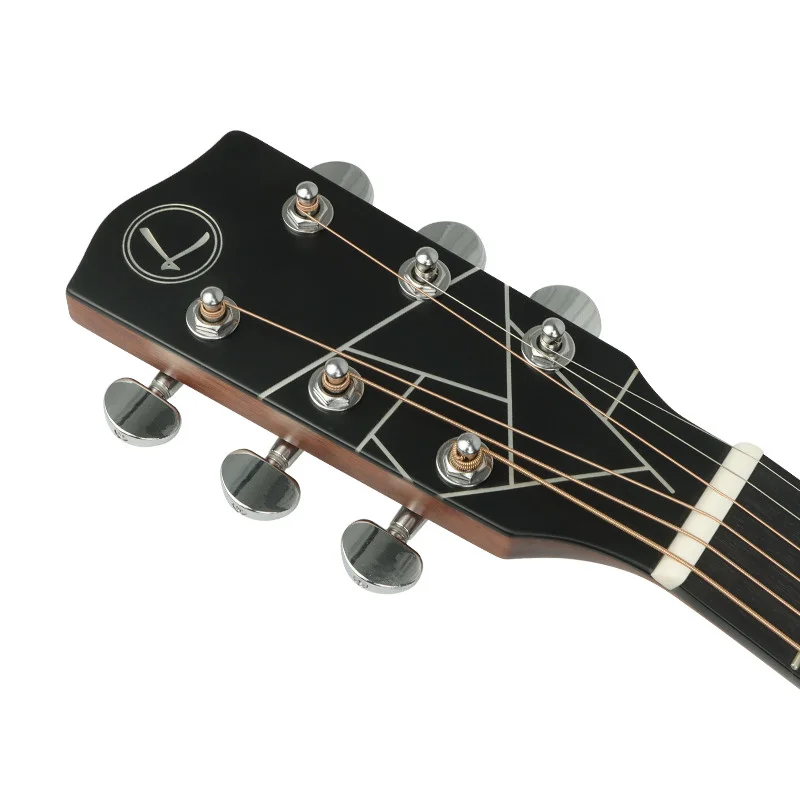
For a six-string sample in standard tuning, an E-to-E record can specify the distance between the centers of the two outer strings at the nut. State the center-to-center method explicitly. A reading between the outer edges of those strings includes their diameters and is a different measurement.
Adjacent strings can have different diameters. StewMac’s string-spacing instructions describe proportional spacing for locating string positions. Consequently, an overall span does not tell staff every individual gap between neighboring strings.
This is a comparison procedure, not a nut-cutting tutorial. Measure carefully without marking or modifying the sample. If a slot appears damaged or a string is sitting unusually close to a fingerboard edge, record the observation and seek the model’s service guidance.
| Field | Definition to put in the record | Question it helps answer |
|---|---|---|
| Nut width | Outside edge to outside edge across the nut | What is the declared width at this location? |
| Nut E-to-E span | Centers of the outer strings, measured at the nut | How far apart are the outer string positions? |
| Bridge spacing | Outer-string identities, center or edge endpoints, and exact bridge measuring location | What room does the picking hand encounter here? |
| Neck profile | Published shape description and sample observation | How does the neck sit against the palm? |
| Strings | Type and complete set used on the sample | What was fitted during the comparison? |
| Playing task | Chord, fingerpicking pattern or other task tried | What did this customer actually find comfortable? |
Compare instruments through the customer’s normal tasks
Invite the customer to try a familiar chord sequence, then a task that reflects their playing. Give them time to compare instruments in the same position. Ask what felt crowded, what required a stretch and what changed under the picking hand. Record their preference without turning it into a rule for everyone with a similar hand size.
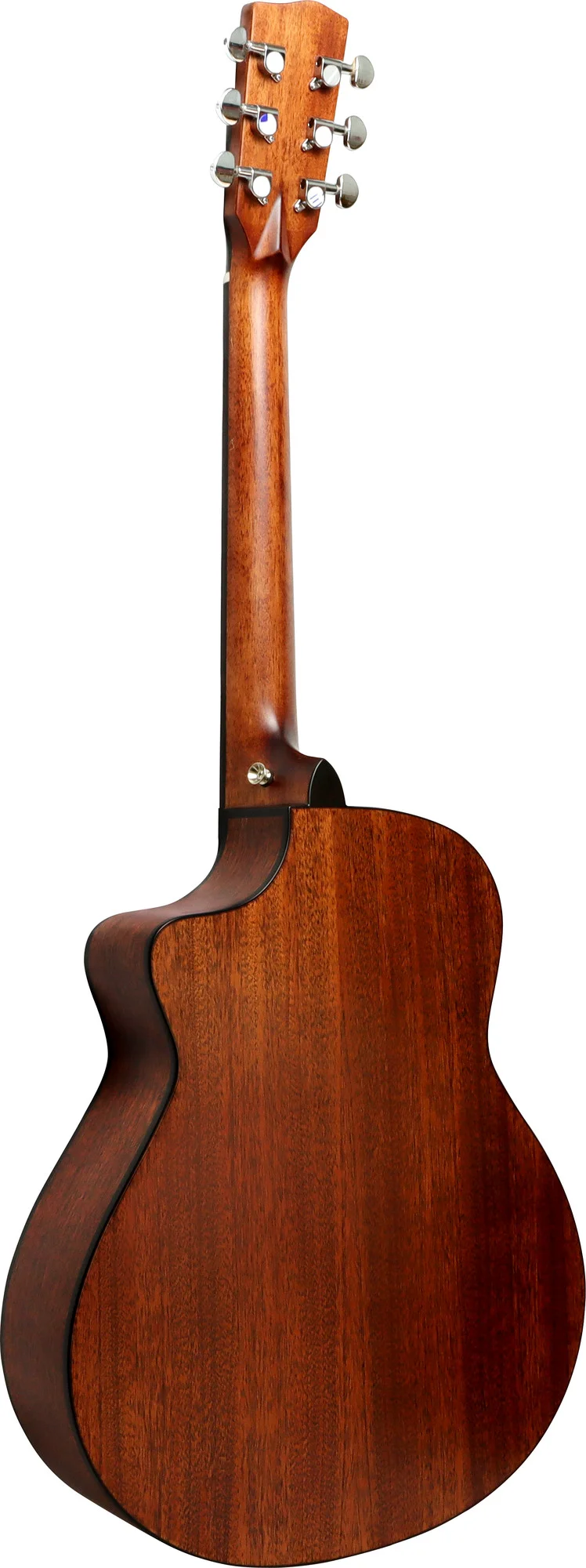
The rear view of a neck can help explain profile and construction, but dimensions should come from the specification or the actual sample. A perspective product photograph is not a measuring scale. Avoid estimating a nut width from image pixels or describing a photographed model as wider than another without the corresponding data.
Model details for this comparison
Open the model specification and request the measurements needed for your comparison.
S-G25
Published model fields
- Neck
- Roasted maple, C profile
- Fingerboard
- Roasted maple, 9.5-inch radius
Request nut width and outer-string spacing at the nut and bridge, with the measurement points and units.
Ask about S-G25S-G27
Published model fields
- Neck
- Roasted maple, satin finish
- Scale length
- 648 mm / 25.5 inches
Request nut width and outer-string spacing at the nut and bridge, with the measurement points and units.
Ask about S-G27Use LUXARS specifications without filling missing fields
The current LUXARS S-G25 page identifies a C-profile roasted-maple neck, a 9.5-inch fingerboard radius and a 648 mm / 25.5-inch scale length. Those are separate fields. Its listed specification does not provide a nut-width or E-to-E measurement, so neither should be inferred from the radius or scale length.
The LR5D specification identifies a bone nut and saddle. Material does not establish their width or string spacing. Request the dimensions and measurement definitions needed for your comparison, then keep the confirmed information with the exact model record.
This approach also helps an online seller create useful filters. Publish a verified field with a clear name and unit. Do not put a bridge-spacing value into a nut-width filter simply because both are expressed in millimeters.
Keep parts selection separate from handfeel selection
A customer liking an instrument’s spacing does not establish that a replacement nut or bridge will fit. Parts selection needs additional dimensions and fitting information. Forward the model identity and the intended component to the appropriate service specialist rather than treating one width as a complete compatibility check.
For a broader explanation of neck geometry, link the customer to the fingerboard-radius guide. Keep this article’s record focused on width, spacing and the actual tasks used in the comparison.
Request the dimensions your range needs
Contact LUXARS with the models being considered, your market and the fields you need for product listings or shop demonstrations. Ask for nut width, the defined string-spacing measurements and any applicable sample information before publishing a detailed comparison.
 English